Showing posts with label Non-Fiction. Show all posts

Monday, 6 December 2021

Shadow City – A Woman Walks Kabul by Taran N Khan


Reviewer:
Catriona Troth

What We Thought of It:


“In this ‘amnesiac city’ I found that walking offered a way to exhume history – a kind of bipedal archaeology – as well as an excavation of the present.”


This is a view of Kabul very different from the ones that we in the West typically read.

Beginning in 2006, five years after the overthrow of the Taliban government, Taran N Khan began a series of extended visits to Kabul, teaching video production techniques to employees of a government TV and radio station. Ignoring security advice never to walk anywhere in the city, she began to explore the city on foot, discovering things she would never have seen through the windows of a taxi or an armoured vehicle.

Khan is not Afghan. She was born in Aligarh in India. But her family are Pashtun (or Pathans, as they are known in India), part of the same family as one of the main ethnic groups of Afghanistan, and her arrival in Kabul feels like a return to a place she has never known. So though she views Kabul as an outsider, she comes to it through very different perspective than the typical western journalist or foreign aid worker.

The book is organised thematically – it begins with an exploration of bookshops, searching for books to read during the long evenings in a city with no nightlife. She finds the Public Library that survived, depleted, both the civil war and Taliban rule. She moves on to graveyards - some formal, like those built to inter foreign soldiers who died in colonial-era wars; others scattered, graves dotted wherever space can be found. She finds names without graves, graves without bodies.

She witnesses how heritage is erased, not only through deliberate destruction, but sometimes just through neglect, through looking away and doing nothing.

She explores the history of cinema in Afghanistan – from the film makers trying to create an Afghan Bollywood, to those who risked everything to hide and preserve precious documentary footage of modern Afghan history.

She discovers hidden epidemic of mental health issues – unsurprising in a country that has suffered decades of civil war, but still considered a matter of shame. She uncovers the complex rituals of courtship in a city where it is difficult for young men and women to meet as couples – and also the over-the-top culture of wedding extravaganza. “If love is a secret language, a code tapped out beneath the surface of the city, Kabuli weddings are the opposite. They are declarations of love and manifestations of romance on a monumental scale.”

Khan’s familiarity with the history of Kabul enables her to portray its present reality against the rich tapestry of its cultural heritage, of its poets and storytellers. Its reformers, who fought to bring modernisation and liberal ideas long before the West marched in in 2001. And its record of once offering sanctuary to those caught up in wars and conflict.

“To call Kabul an amnesiac city […] could also refer, I realised, to its obscured culture, to the vanishing of the very idea of Kabul as a city with history; with a specific, cosmopolitan way of life.”

Through Khan, we are also privy to the ways in which Kabul changed between 2006 and Khan’s final trip in 2014. How the early euphoria of liberation became bogged down in corruption and disillusionment. How more and more of the city barricaded itself of behind high security walls, while in other parts homelessness and drug use spiralled.

“With each return to Kabul, I saw the city retreating into itself. […] A patina of disillusionment […] lay over Kabul’s streets, which were increasingly difficult to walk on.”


Just a week or so after I finished reading this book, the evacuation of US and UK troops from Kabul began. I felt this book had prepared me to understand, much more clearly, how what followed was not a surprise, how the path to the ‘fall’ of Kabul has been clearly written over many years.

“In the space between what I saw and what I wrote, Kabul twisted its shape and changed. It has changed again, even as you read it. Bood, nabood. It appears and vanishes with the shift of the kaleidoscope, with the way of seeing.


I marked dozens of passages throughout this book as I read. Khan’s language is beautiful, her sympathy for the people of Kabul manifest. This may be a last glimpse of a city that will soon no longer recognisably exist – or it may chart just another turn of the wheel in a long, long history.

Winner of the Stanford Dolman Travel Book of the Year 2021  

You’ll Enjoy This If You Loved: Afropean – Notes from Black Europe by Johny Pitts; Around the World in 80 Trains by Monisha Rajesh; No More Mulberries by Mary Smith

Avoid If You Dislike: Travelogues that challenge your preconceptions

Perfect Accompaniment: Kawah - green tea with cardamom, cinnamon bark and saffron.

Genre: Non Fiction, Travelogue


Buy This Book Here:

Thursday, 27 May 2021

Keeping It Under Wraps, edited by Louise Bryant, Alnaaze Nathoo and Tracy Hope

Reviewer: JJ Marsh

What we thought of it: 

I'll read a couple, I told myself, and come back later. 

No. That's not possible. 

These stories are not something you can browse. 

This is pared-down, stripped-back, naked and honest. Don’t look away. 

What happens after ‘fade to black’ is left to the viewer/reader’s imagination and imaginations tend to airbrush experience. Ecstasy, agony, shame, confusion, boredom and laughter are part of intimacy. Sex is all those things and exquisitely personal. 

Keeping It Under Wraps is every conversation we should have had as kids, as teenagers, as middle-aged searchers for the G-spot. Broken hearts and pain, sex toys and laughter, pornography and puzzlement, sex and self-respect, it’s all here. 

I loved the whispered, shouted and clearly stated personal sex lives in this collection. Sex can be joyous or brutal. One of the ways we reframe our experiences is by listening to others. This book opens a door. 

You’ll enjoy this if you liked: True stories about intimacy, in-depth discussions with the likes of Mariella Frostrup or Pamela Stephenson 

Avoid if you don’t like:
 Frank discussions about preferences and unpleasant truths 

Ideal accompaniments: A warm bath, some time alone and a little notebook to record your own feelings. 

Genre: Non-fiction, anthology, short stories

Wednesday, 19 May 2021

From the Ashes by Jesse Thistle


Reviewer:
Catriona Troth

What We thought of It:

From the Ashes is a painful and poignant memoir from Canadian author, Jesse Thistle. Thistle is Michif, or Métis – descended from the offspring of Cree women and French and Scottish fur traders.

Owing to family breakup, Thistle grew up divorced from his heritage, knowing nothing about the history or language of his people. His father, a drug addict, took him and his two brothers away from his mother and her people and then abandoned them. The boys were brought up by their paternal grandparents who, though they loved them, gave them little understanding or affection.

Thistle ended up homeless and drug addicted, living on the streets and moving in and out of prison. That he survived at all is something of a miracle. But survive he did, and as he hit rock bottom and began to claw his way back up again, he began to ask himself why it is that so many young Indigenous men, like him, can be found in Canada’s prisons and homeless shelters.

The answer, for Thistle at least, lay in reclaiming his Métis heritage – understanding how they came to live as they did, forced to squat on narrow strips Crown lands alongside roads and railway lines, the so-called ‘road-allowances’. As he writes in the dedication:

“The pages of this book speak to the damage colonialism can do to Indigenous families, and how, when one’s Indigeneity is stripped away, people can make poor choices informed by pain, loneliness and heartbreak, choices that see them eventually case upon the streets, in jail or wandering the no place to be.”

From the Ashes is not an easy read. Thistle’s path down into his own personal hell was long and tortuous. He doesn’t spare the reader any of the horror of what the dark extremes of drug addiction do to either the body or the mind.

Some of the most arresting moments in the book come in the poems that are dotted between its chapters. Thistle distils his experiences into instants of time captured in free verse.

I had this tiny bag
It had my old life inside
When I finally got the courage to get rid of it, I left it on the bed
Then I jumped out of the window
Down two stories
But the grass broke my fall.


A troubling, necessary and ultimately inspiring book.

Jesse Thistle is now assistant professor in Métis Studies at York University, Toronto. From the Ashes was the top-selling book in Canada in 2020.

You’ll Enjoy This If You Loved: Stuart, A Life Backwards by Alexander Masters, Jonny Appleseed by Joshua Whitehead, Birdie by Tracie Lindberg, The Break by Katherena Vermette

Avoid If You Dislike: Grim details of the physical and mental impacts of extreme drug addiction

Perfect Accompaniment: Bannock and Saskatoon berries

Genre: Non-Fiction, Memoir, Indigenous Writing


Buy This Book Here

Tuesday, 4 May 2021

Inferno by Catherine Cho


Reviewer:
Catriona Troth

What We Thought of It:

Three days before the traditional Korean 100-day celebration for the birth of her son, Catherine Cho found herself in hospital, suffering from post-partum psychosis.

Cho writes with acute self-awareness, both about her breakdown and about her life leading up to it. The book travels along parallel lines – one that begins with Cho finding herself on a secure psychiatric ward and chronicles her experience through hospital to her release, and the other which reaches back, to her childhood and early adulthood, searching for the roots of her breakdown.

She remembers life in her near silent home, with a father who vented his volatile temper on her younger brother and disapproved of anything resembling pop culture – delivering a childhood like a 20th Century version of Edmund Gosse’s Father and Son.

“My father wanted his children to be clean thinkers, unpolluted by commercialism. He has a vision of raising us apart from the world, off the grid, away from any pre-dictated rules except his own.”

Then there was the violent domestic abuse of a previous relationship, that left her stranded and isolated, far from home in Hong Kong.

Having risked all to move across the world for one relationship, she does it again – this time to move to London with her husband. She and James are profoundly happy and the birth of their son Cato seems only to put a seal on that happiness. But then they plan a trip of a lifetime to visit family in the US. It’s tiring and stressful – and cultural pressures from their extended Korean families build up, as well-meaning anxieties about mother and child cause them to reach back deep into tradition.

Koreans, she explains, as suspicious of happiness and romantic love. “Koreans believe that happiness can only tempt the fates and that any happiness must be bought with sorrow. As for love, it is thought of as an unfortunate passion, irrational and destructive.”

As the pressures pile on, Cho’s mind begins to blur the boundaries between reality, dreams and mythology. Cho conjures up for us the tragic heroines from the folktales she grew up on – Sim Chung, who sold herself as a human sacrifice to save her blind father; Nong Gae, the courtesan who danced an invading general off a cliff. Perhaps she needs to sacrifice herself for James and Cato?

Cho’s clear and poetic language beguiles us along a path, until her breakdown seems as inevitable to us as it must have done to her.

I have to admit, I approached this book with some trepidation. I had memories of being required to read Joanne Greenberg’s I Never Promised You a Rose Garden as a set text in high school and finding fascinating but utterly terrifying. Yet shocking as the scenes are where Cho recalls in detail the hours and minutes of her psychotic break – this is a book that offers a lifeline of hope to those suffering from post-partum psychosis, and to those who love them.

Profound, honest, revealing – and ultimately hopeful.

Shortlisted for the 2021 Jhalak Prize

You’ll Enjoy This If You Loved: I Never Promised You a Rose Garden by Joanne Greenberg (orig. under the name Hannah Green), Are We Home Yet? by Katy Massey

Avoid If you Dislike: Confronting the vivid details of a psychotic break

Perfect Accompaniment: Seaweed soup

Genre: Non-fiction, Memoir

Buy This Book Here:

Monday, 19 April 2021

Are We Home Yet? by Katy Massey


Reviewer:
Catriona Troth

What We Thought of It:

The memoir opens with Massey’s realisation, at the age of eleven, that her mother is using their comfortable home in Leeds as a place from which to sell sex. She marks that as the point at which she split herself in two.

“In the pause, I am falling apart, literally becoming two people. I remain the plump playmate that Sarah takes me for, but I have also become someone else who floats just above us, watchful. Alert. This version of me knows that something has changed forever […] though I can pretend, that simple young girl has gone forever.”

By the time Massey was in her late teens, her mother had graduated from prostituting herself out of their back room to running a spa-cum-brothel in an industrial area of Leeds. Massey finds herself acting as receptionist, spending long hours chatting to the ‘girls’, recognising the sheer banality of the sex industry, “where good looking, decent women who could hold a conversation offered various sexual services in exchange for money. “

But Massey’s story is far more complex than that one eye-catching headline. There’s the sense of loss associated with her all-but non-existent relationship with her absent father; her complicated relationship with food that goes back to a stepfather who fed her sweets to comfort her for the pain caused by his own tormenting; the issues she has faced as a mixed-race child in an otherwise all white family, and the rarely-spoken-of death of her middle-brother.

The memoir braids together three timelines – Massey’s own childhood, her mother’s younger life, and the present day as she tries to piece it all together and come to terms with her own struggles.

Massey’s writing explores her own ongoing depression and her troubled relationship with her mother with razor-sharp clarity. On bad days:

“Even the street beneath my feet feels somehow insubstantial, as if it may melt and I go through the sinking tarmac until the black sludge closes over my waist, my handbag, my necklace and finally my head and there is no trace of me left.”

At other times, “I walk the street towards Mam’s flat with my loneliness attached to my heels, dragging behind like a recently shed skin.”

There is a breath-taking self-awareness in the way she confesses that “I had made my relationships into broken clocks and gleefully reduced them to their parts. Spreading them out on the kitchen table, fascinated with the possibility in those shiny nuts and wheels, I always realised to late that there was no home of reassembling the, turning them back into something of purpose.”

A powerful study of family dynamics and the toxic legacy of secrets. Shortlisted for the 2021 Jhalak Prize

You’ll Enjoy This If You Loved: Lowborn by Kerry Hudson, My Name is Why by Lemn Sissay

Avoid If you Dislike: Memoirs of genteel dysfunctionality.

Perfect Accompaniment: Milky tea and cheese straws

Genre: Memoir, Non-Fiction

Buy This Book Here:

Monday, 22 March 2021

The Address Book by Deirdre Mask


Reviewer:
Catriona Troth

What We Thought of It:


If it hadn’t been for the Jhalak Prize Longlist, I doubt if I would have picked up a book about street addressing. But I am so glad I did! Deirdre Mask takes what sounds like a dry, niche subject and turns it into a fascinating exploration of something most of us take for granted and which in fact impacts every corner of our life.

Why do so many of us live in numbered properties along named streets? Is it inevitable that that’s how addresses should work? What impact do our addresses have on our lives? And what happens when you don’t have one at all?

Mask travels the world in search of the answers to those questions. She visits places from Kolkata to West Virginia that have no addresses. She looks at the different processes that used to acquire / impose them. She goes to Japan to show how, instead of named streets, they have numbered cho, or blocks, with the sequence of numbers often determined chronologically rather than geographically.

She reminds us that the very idea of street numbering was once radical and hugely controversial.

From Victorian London to 21st C Haiti, she shows how addresses have been a vital tool in tracing the sources of disease and contain their spread.

She shows how politics, race and class affect how street names are chosen – but also how the names themselves then impact on how the streets are perceived and how well they prosper.

And she looks at the way that people are using modern technology to address the problem of people and places that have no addresses.

This book is a fascinating mixture of history, geography and sociology – with disparate ideas drawn together in an engaging and accessible way. Hurrah for the Jhalak Prize for bringing it to my attention.

You’ll Enjoy This If You Loved: Built by Roma Agrawal, Afropean by Johny Pitts

Avoid If You Dislike: Deep dives into small aspects of our lives

Perfect Accompaniment: A range of city maps from around the world, a cup of tea and a quiet afternoon

Genre: Non-Fiction

Buy This Book Here


Saturday, 13 March 2021

Empireland by Sathnam Sanghera


Reviewer:
Catriona Troth

What We Thought of It:

On the morning that I sit down to write this review, there is an article in the Guardian about the depth of abuse Sathnam Sanghera has faced since the publication of Empireland. That such a balanced and measured book could make its author the subject of vitriol is as clear an indication as any of just how blind we, the British public, are to our own history and how necessary this book is.

After a light-hearted opening, where the author imagines a revived Empire Day, repurposed to teach the history and ongoing ramifications of the British Empire, Sanghera goes on to look honestly at his own connections, through his Sikh ancestry, with Empire, both the positive and the negative. He concludes:

“Having faced up to how British [Empire] has shaped and defined my life in deep ways, I had never realised, I can’t help but wonder how imperialism may have shaped Britain itself.”

He then immerses himself in historic research, only to discover how difficult it is to fix precisely where the British Empire began. Arguably it goes back as far as 1497, when John Cabot sailed across the Atlantic to ‘discover’ Newfoundland, or it could be as comparatively recently as 1858, when the Government of India Act abolished the East India Company and established the supremacy of the British Crown. He points out how, over that time, the tone and culture of empire varied wildly. And he shows how, throughout much of its history, there were those who were deeply critical of the imperial ‘project’: to be critical of Empire is not simply a case of applying the values of the present to actions of the past.

Sanghera doesn’t shy away from what is perhaps for many the most discomfiting fact of the British Empire – that between 1660 and 1807, Britain profiteered from the slave trade, shipping around 3 million Africans to the Americas.

Another aspect many in the present day find profoundly uncomfortable is the question of loot. Precious items stolen from colonised lands vastly enriched some and became the foundation of many of our best-known and most beloved museums. Even more disturbingly, sacred items, including human remains, were treated with scant respect and never returned.

Empire is the reason that, long before the famous Empire Windrush docked in Southampton, people of Indian and African heritage were living and working in Britain. There were servants and doctors, café owners and tradespeople, nurses, lawyers and actors. The first MP of Indian heritage was elected in Finsbury in 1892. 

An understanding of all that ought, one might think, lead to a greater understanding and tolerance of our multicultural, multi-ethnic society. But Sanghera also shows how the need to justify slavery and the appalling abuses that accompanied it led, if not to the invention of racism, then at least to its codification. And until we recognise that, it will continue to haunt us.

We are very good at comparing ourselves to other European empires of the 19th and 20th Centuries and persuading ourselves that we were much more benign. But we have conveniently buried the stories of some of the most brutal episodes of our Imperial history. Until we are willing to face up to that – until someone like Sanghera can write a book about Empire and face, not death threats and abuse, but honest reflection - we are never going to be able to move on from Empire and become the tolerant, diverse and non-racist society we like to imagine ourselves to be.

You’ll Enjoy This If You Loved: Brit(ish) by Afua Hirsch; Natives - Race and Class in the Ruins of Empire by Akala

Avoid If You Dislike: Taking off your rose-tinted spectacles and seeing Britain’s role in the world clearly.

Perfect Accompaniment: What could be a more perfect expression of Empireland than a cup of tea?

Genre: Non-Fiction

Buy This Book Here


Thursday, 7 May 2020

My Name is Why by Lemn Sissay


Reviewer: Catriona Troth 

What We Thought of It

“My mother is from the Amhara people in Ethiopia. It is a tradition of the Amhara to leave messages in the first name of a child. In Amharic, the name Lemn means Why?”

Lemn Sissay’s My Name is Why is a forensic analysis of his own case files – the case files of a Black child taken into care, his name changed to make it all-but impossible for his birth mother to trace him.

Every one of those files is measured against his own memories. Together they paint a picture of a family who take in a child they believe to have been abandoned, who make him part of the family and who appear to love him – but who reject him brutally at the first sign of adolescent rebellion. Thereafter, Sissay (by now called ‘Norman’) is shunted between children’s homes with little care for his actual needs, reaching at last a place that is little better than a prison in disguise..

As Sissay himself says, “the most institutionalised people in the care system are the workers.”On the whole, those social workers who come into direct contact with the young ‘Norman’ come across as caring and concerned, if somewhat blinkered. (And the consistency of care he receives, being in the charge of just two principal social workers through his childhood seems downright remarkable by recent standards.) But those higher up, those with the power to make decisions about his life, show little or no understanding of his needs, nor of the day-to-day impact racism is having on the developing adolescent.

I first saw Lemn Sissay on stage in Trafalgar Square, at the party to celebrate the first ever World Book Night in 2011 , where he gave a tour de force performance of Tennyson’s ‘Ulysses’. I knew nothing about his background at the time, but just a year earlier he had made a radio documentary, Child of the State, where he returned to Wigan to try and access his own files, only to be told they were lost. It was only in 2015 that the files were finally recovered and he was able to read them and unpick the lies he had been told.

Out of that experience grew the stage show, The Report, in which Sissay responded to a reading, by Julie Hesmondhalgh of the psychologist’s report into the impact on him of his abuse.

The book can never be as raw as that theatre experience must have been. Yet Sissay’s pain and anger and still clear on every page. Even choosing to read the files, having fought to see them, was a not an easy decision.

“A friend burned her files when she received them from the Authority. Another cannot read them to this say. I’ll start by simply recording my reactions to the first early documents and we’ll see how it unfolds.”

A book so personal it feels almost intrusive to be reading it. Yet essential to understand how a child can be taken from his mother by the agents of the State – something which we now know has been replicated over and over with different groups of mothers and children around the world, with devastating consequences.

“I am not defined by scars,” writes Sissay, “But by the incredible ability to heal.”

You Will Enjoy This If You Loved: Lowborn by Kerry Hudson, Natives by Akala, My Name is Leon by Kit de Waal, Indian Horse by Richard Wagamese

Perfect Accompaniment: Bacon butty and hot tea

Avoid If You Dislike: Unvarnished descriptions of a child’s life in the care system

Genre: Non-Fiction, Memoir

Buy This Book Here


Thursday, 2 April 2020

Afropean – Notes from Black Europe by Johny Pitts

Reviewer: Catriona Troth

What We Thought:

Winner of both the 2020 Jhalak Prize and the 2020 Bread and Roses Prize for Radical Publishing

Johny Pitts was born in Sheffield, son of an African-American actor and singer and a white working class mother, and grew up “a Northern Soul baby.” But conscious that European was still being used as a synonym for ‘white’, one cold October morning, he set out in search of “a space where blackness was taking part in shaping European identity at large ... where being black in Europe didn’t necessarily mean being an immigrant.”

If David Olusoga’s Black and British: a Forgotten History encompassed the long history of Black people in Britain, going back to the Roman period, Afropean: Notes from Black Europe reaches out geographically, exploring the Black experience in Europe from Stockholm to Lisbon, Moscow to Marseilles.

“What about black Europe ... found in the equivocal and untidy lived experiences of its communities? Black Europe from the streets up?”

Pitts finds communities often isolated from the cities of which they are nominally part – some vibrant but fragile, like the illegal favelas clinging to the fringes of Lisbon, others desperate and alienated, like those in the semi-derelict remains of 60s brutalist high-rises in Clichy-sous-Bois in Paris. He finds himself mourning the deliberate undermining of working class solidarity, “spinning the presence of black people as a threat rather than in opportunity.”

“Very often, Europe’s black workforce inhabits the liminal terrain I’d just experienced, as cleaners, taxi drivers, porters, security guards, ticket sellers and nightclub bouncers; they are there and not there.”


Along the way, he draws on the experiences of earlier black writers such as James Baldwin, Franz Fanon, Carol Phillips. He reminds us of figures from the past we often conveniently forget had a black heritage, such as Alexandre Dumas – grandson of an enslaved woman from Haiti – and Alexander Pushkin, whose great-grandfather was kidnapped in Africa and sold to the sultan of the Ottoman Empire. And he finds differing attitudes to Blackness in different countries – from outright denial via historical amnesia and structural racism to naked bigotry.

“When a society has so convinced itself it isn’t racist, it feels vindicated and victimized when immigrants who are responding to very real racism raise their voices.”

He reveals the often buried histories that brought African people to Europe – from the earliest origins of the slave trade via 19th Century colonial empire building to the Cold War battle for ideological dominance. He has his illusions shattered in Stockholm, which he’d previously only seen through the lens of a comfortable middle class, and finds at last, in Marseilles, a place to which he knows he will return.

This is a Europe that many of us, as white, middle-class tourists, will never see. It challenges the comfortable  idea of Europe as a tolerant and open society and shines a light on how “the European superiority complex has found its way into your psyche ... transferred through a thousand intimate moments, planted in the fertile, innocent and happy memories of childhood.”

You’ll Enjoy This If You Loved
: Black and British: a forgotten history by David Olusoga; Stopping Places by Damian le Bas

Avoid If You Dislike:
Having your idea of a tolerant, post-racist society challenged (but read it anyway).

Perfect Accompaniment:
A fresh baked baguette and a glass of orange juice.

Genre:
Non-Fiction, Travel Writing

Buy This Book Here

Thursday, 12 March 2020

Hostile Environment by Maya Goodfellow

Reviewer: Catriona Troth

What We Thought:

Hostile Environment is the name given to a raft of measures initially implemented by Theresa May as Home Secretary under David Cameron, designed to deter so-called “illegal immigrants” from coming to the UK and to make life as difficult as possible for them if they did enter the country.

But as Maya Goodfellow’s meticulously researched book shows, these policies did not spring out of nothing, but are the culmination of decades of policies by governments from the right and from the left who, in one way or another, have sought to control and demonise those they choose to label as outsiders.

Exactly who is marked out in this way has varied over time. The ‘Other’ has been variously Irish, Jewish, Black, Brown – or from a country that is in some unspoken way considered ‘less than White’. At times, ‘economic migrants’ have been lauded as ‘coming here to work and contribute,’ while refugees have been suspect, presumed to be ‘bogus’ or ‘scroungers’. At other times, it is ‘genuine refugees’ who are said to be in need of our protection, while ‘economic migrants’ are accused of taking jobs and driving down wages while simultaneously scrounging off our benefit system.

What has been consistent, as Goodfellow shows only too clearly, is that migrants of one sort of another have been used as scapegoats by successive governments for their own failures to produce a more equal society, and who choose to ignore the historic and goppolitical reasons that bring people to our shores. A constant dripfeed of what Goodfellow calls xenoracism (the peculiarly toxic mixture of racism and xenophobia) has been fed to the general populace by politicians and the media, who then use people’s resulting ‘legitimate concerns about immigration’ as an excuse for further demonisation and even stricter immigration controls.

This is a book that left me shaking with fury. Not that there was much in it that I didn’t already know - but to see it all laid out so clearly in one place makes it clear how relentless it has all been. Seventy years after my father, as a young Masters student, began documenting the impact racism was having on the lives of Liverpool’s Black community, the public discourse is as toxic and institutionally divisive as it has been at any point in my lifetime. Goodfellow’s vision of a better , more open world, set out in her Conclusion, seems an impossible dream.

But as she also shows, that fear of the other is not as innate. There are plenty of examples of communities coming together in defence of those the authorities try to ‘other’ - for example to prevent deportations. Perhaps therein lies hope.

Longlisted for the 2020 Jhalak Prize, this is a book that lifts the veil on our immigration system and reveals the lies on which it is based and the human consequences of its controls.

You’ll Enjoy This If You Loved: A Country of Refuge (ed Lucy Popescu) The Good Immigrant (ed Nikesh Shukla) Natives by Akala

Avoid If You Dislike: Having your preconceptions of immigrants and refugees challenged (but read it anyway!)

Perfect Accompaniment: A pot of tea made with leaves grown in India or Africa on plants brought from China by the merchants and soldiers of the British Empire

Genre: Non Fiction


Buy This Book Here:

Friday, 15 November 2019

Lowborn by Kerry Hudson

Reviewer: Catriona Troth

What We Thought:

“Shall we start with a happy ending? I made it. I rose. I escaped poverty. I escaped bad food because that’s all you can afford. I escaped threadbare clothes and too-tight shoes. I escaped drinking and drugging myself into oblivion because ... because.”


Reading Kerry Hudson’s memoir, Lowborn, straight after Candice Carty-Williams’s novel, Queenie was fascinating and troubling. Hudson’s story doesn’t have the dimensions of race and immigration, but in so many other ways, the parallels are clear. Poverty. Deprivation. Toxic masculinity. Generational Trauma. Deeply damaged women not recognising that they are passing on the same hurts to their daughters and granddaughters. And the consequences for those daughters: night traumas, panic attacks and self esteem that remains desperately fragile even when you have far, far exceeded the low expectations you were set as a child.

The books is, as the author says, “the outcome of questions that still disturb my peace.” It is a journey through all the places – from Aberdeen to Great Yarmouth – where she spent her childhood. Part memoir, part assessment of how things have changed – for better or for worse – for young people growing up in those towns.

It is also a raging protest against all those who have spent the last few years demonising the poor – calling them lazy, work-shy, scroungers. True poverty, she says, is “all-encompassing, grinding, brutal and often dehumanising.”

She describes the hyper-vigilance of a child constantly in foreign environments with strange people. The impact of being constantly told not to utter a word about what was happening in your childhood – your body seizing up, your mouth refusing to form words. “The words I heard spoken to me in my first twenty years are tattooed everywhere under my skin.”

For those of us who grew up in a different kind of world, it can seem as if Hudson is speaking from another planet, such is the divide that has been created and sustained in our society. And recent government policy has done little to improve things and much to make them far, far worse.

A necessary reality check and an antidote to the distorted portrayals of poverty in programmes such as Benefits Street.

You’ll Enjoy This If You Loved: Queenie by Candice Carty-Willams, Natives by Akala, Stopping Places by Damian le Bas, Common People (ed Kit de Waal)

Avoid If You Dislike: Being reminded what a desperately unequal society we live in

Perfect Accompaniment: An Aberdeen smokie (smoked kipper)

Genre: Non-Fiction, Memoir

Tuesday, 9 July 2019

It’s Not About the Burqa (ed. Mariam Khan)

Reviewer: Catriona Troth

What We Thought Of It:

“Being among peers asks us [...] to delve into the granularity of our experiences as Muslim women beyond the obvious.”

This quote from ‘Life Was Easier Before I Was Woke’ by Yassmin Midhat Abdel-Magied sums up why this collection of essays, put together by Mariam Khan, makes it possible to present a rarely seen complex and nuanced picture of Muslim women in Britain today.

There are women here who wear the hijab, the veil or other forms of Islamic dress, and others who reject it entirely. There are women whose families came originally to Britain from all parts of Africa and Asia, as well as those with complex combinations of heritage. They include journalists, poets, novelists, publishers, lawyers, an engineer, a comedian ...

In the course of these essays they take on the fashion industry, toxic masculinity, White Feminism, mental health, sexuality and women’s legal rights (to name just a few).

Some of the stories show how savage the backlash can be from society when Muslim women step outside the bounds of what is defined as a Good Immigrant and dare to speak up for themselves. And yet they continue to do so.

As Afsham D’souza-Lodhi says in 'Hijabi (R)evolution': “I’m done engaging in conversation with people who don’t understand that human beings are complex. That I can wear a hijab and a dress. That I can be queer and Muslim. That I can exist.”

A book that smashes into smithereens every stereotype of Muslim women so assiduously pursued by our mainstream media. Read it!

You’ll Enjoy This If You Loved: The Good Immigrant (ed. Nikesh Shukla), The Things I Would Tell You (ed. Sabrian Mahfouz)

Avoid If You Dislike: Seeing your preconceptions torn to shreds

Perfect Accompaniment: An open mind and a listening ear

Genre: Non-Fiction, Essays

Available on Amazon

Wednesday, 26 June 2019

Mother Country: Real Stories of the Windrush Children (ed. Charlie Brinkhurst-Cuff)

Reviewer: Catriona Troth

What We Thought:

It is the bitterest of ironies that the Windrush Scandal blew up in the year that was supposed to have been a celebration of the 70th Anniversary of the arrival of the “Windrush Generation” – those British subjects from colonies and former colonies who answered the cry of the “Mother Country” to come and fill the massive labour shortage resulting from years of war.

There is a lot to unpick in that oversimplified summary of the situation, and Mother Country, telling as it does the individual stories of twenty-two of those immigrants and their descendents, does a lot to show the true complexity of their history. It includes stories from David Lammy, Lenny Henry, Sharmaine Lovegrove, Corinne Bailey Rae and Jamz Supernova among others.

The Empire Windrush was not the only ship – nor even the first – to bring workers from the Caribbean to these shores. Nor was it just young men who came. Women came, on their own or with their families. Children came, as children did in those days, travelling on their mother’s passports.

Those who came were only in the Caribbean because their ancestors were transported there by the British – whether as chattel slaves from Africa or as indentured servants from other parts of the Empire. They had been taught to think of Britain as the ‘Mother Country’, and they answered her call for help.

And they are far from a monolith, as these stories show. There were those who come from desperately poor backgrounds and those who came from comfortable homes. Those who were highly educated and forced to take much more lowly work than they had been doing back home, and those for whom the Caribbean of the post-War years had nothing to offer.

I wept over the description of the funeral in Natasha Gordon’s 'Nine Nights', and salivated over Riaz Phillips’ celebration of Caribbean food. There were recurring themes, too. Like the house parties “centred on the pulsating ska rhythms of the day – accompanied by rice and peas, curried meats fried dumplings and run – [that] ran deep into the night.” Parties that took place in people’s homes because they were not welcome in any of the public spaces where white people socialised.

And then there was the notion of ‘barrel children.’ As so often with immigrant families, part of the motivation for coming to Britain was to be able to try and make life better for those back home. So families would scrimp and save and send what they could. And they would keep a barrel which they would gradually fill with clothes and toys and other goods. And then they would seal it up and send it back home to be distributed to those who needed them.

The Windrush Generation are often celebrated as immigration ‘success stories’. Academic Maria del Pilar Kaladeen might be regarded as one of those successes, but the story she tells of her two brothers shows how some were broken by the racism they faced in this country. Gail Lewis evokes the term ‘natal alienation’. “You are natally alienated both from your nation of origin and your culture, and you are alienated from your mother. Quite literally.” That is part of this story too.

The shocking death of Joy Gardner in 1993 (recalled here by her mother, Myrna Simpson) reminds us that the roots of the Hostile Environment go back long before 2017. If her tragedy is not to be repeated, we need a fundamental change in our attitude to immigration. But that will require us to acknowledge the roots of our present-day multi-ethnic society lie deep in Britain’s past

You’ll Enjoy This If You Loved: The Good Immigrant (ed. Nikesh Shukla), A Country of Refuge (ed. Lucy Popescu)

Avoid If You Dislike: Facing up to the human consequences of  Britain's past

Perfect Accompaniment: A dish of rice and peas

Genre: Non-Fiction, Essays


Available on Amazon

Thursday, 16 May 2019

The Stopping Places: a Journey Through Gypsy Britain by Damian le Bas

Reviewer: Catriona Troth

What We Thought:

In a Jhalak Prize longlist dominated this year (2019) by non-fiction books, this one stood out for me. It struck me as I read it that anti-Roma prejudice could be called ‘the last non-taboo’ – a bigotry to which many otherwise liberal members of the white middle classes would still admit to without blushing.

It is also a voice rarely heard. Almost my only other encounter with non-romanticised writing about contemporary Romanies was at the 2011 Sanctuary London event, when New Zealand author Garth Cartwright read from his book Princes Among Men, an account of his travels with the gypsy musicians in the mahalas (ghettos) of Eastern Europe – and even then, that was writing ABOUT Romanies, not the voice of a Roma author. I am sure part of that is my failure to look, but it is certainly a voice is desperate need of boosting.

Damian le Bas comes from a long line of English Romanies based around Surrey. He was raised in a Romany family, speaks the Romani language and has suffered his fair share of anti-Roma prejudice. But because he is of mixed blood – with fair skin and fair hair – even some of his own family don’t fully accept him as a true Gypsy (the word, always capitalised, that he himself most often uses to describe his people).

So one autumn he sets out in a white transit van to discover the aitchin tans – stopping places – used by Romanies and Travellers around the country. He starts with the ones his family have used for generations – Pagham’s Copse, Butler’s Down, Messenger’s Meadow, names that are unlikely to appear on any map.

Then he branches out, travelling around the country, going to famous horse fairs like Horsmonden in Kent and Appleby in Cumbria. He crosses the channel to attend the annual ceremony of Sara-la-Kali in Petit Camargue – where the Manouche (French Romanies) commemorate the arrival of the first Gypsy in Europe. He follows the trail of the Welsh Gypsies of Lake Bala – said to be the home of the purest form of Romani spoken in Britain. (Though why, le Bas asks, is English praised for its ability to adapt, to taken on board words from other languages and to invent new ones, and yet Romani scorned for the same adaptability?) At his furthest point north, finds the site in Scotland of the first recorded Gypsy presence in Britain, at the beginning of the 16thC.

His writing throughout is richly evocative – as in this description, early in the book, of his family’s flower selling business at Petersfield market.

“There were boxes of daffodils packed squeaky tight; tall green buckets of chrysanthemums, yellow and copper and pink, stargazer lilies that burst into purple and white streaked with orange. There were little black buckets of freesias, their buds like fruit humbug sweets sucked to a tight bright core...”


In the course of le Bas’s year long journey discovers the rigours of living on the road through winter, and the joys of the summer. He rediscovers some of the tricks and habits that made such a life possible. He encounters friendliness among settled folk who remember Gypsies as season workers in hop fields and on fruit farms, and rare hostility from fellow Romanies determined to maintain old demarcations.

By the end of the year, le Bas has begun to come to terms with his dual identity, reflecting:

“I am at the roadside, miles from anyone I know, and yet still in my place, inside my home, my own little world. I feel a mounting dislocation form the constant need for an endpoint ... I’ve lost the constant need to get somewhere.
We are all somewhere, I tell myself. I go back to the van and put the key in the igniting, in no great hurry to hear the engine start.”

The way of life that le Bas’s great grandmother, Nan, grew up with is gone, and with it some terrible hardships. Yet le Bas shows there was a time when Romany life slotted in with the seasonal nature of farm work and a kind of coexistence was possible. The present day almost complete lack of tolerance by settled communities of Travellers and Romanies is, in the end , in the interests of no one.

You’ll Enjoy This If You Loved: Travels in an Old Tongue by Pamela Petro; Indian Horse by Richard Wagamese, Princes Among Men by Garth Cartwright.

Avoid If You Dislike: Pulling back layers of romanticism and demonisation

Perfect Accompaniment: A cup of tea brewed by the side of the road

Genre: Non-Fiction

Available on Amazon

Monday, 22 April 2019

Brit(ish) - on race, identity and belonging by Afua Hirsch


Reviewer: Catriona Troth

What We Thought:

This conversation is long overdue: a conversation begun in the spirit of honesty, not defensiveness, or fear, or blindness.”

Afua Hirsch is a British born woman of mixed race. On one side, the father is half Yorkshire, half German Jewish. On the other side, her grandparents were Ghanaian. She grew up in relatively privileged circumstances in the leafy London suburb of Wimbledon, going first to private school and then Oxford University.

While Hirsch acknowledges that her experience is a world away both from the brutal racism faced by her parents’ generation and the life of young black people growing up in places like Tottenham, where poverty and lack of opportunity are rife:

“I didn’t find race, race found me: in the playground, or the classroom, on the street, in the shops.”

Hirsch describes searching for an identity in Africa, first as a new graduate working for a non-profit organisation in Senegal, and later with her young family in her grandparent’s home country of Ghana. Yet what she discovers is that, though Britishness contains the threat of exclusion, there is in fact nowhere else to go. Her identity IS British.

In this wide-ranging book she addresses such topics as our failure to properly address the truth about imperialism and British involvement in the slave trade. She examines the changing policies towards interracial adoption, Home Office attitudes to immigration and the concept of the Good Immigrant. She looks at colourism and the attitudes towards black women’s hair. She looks at riots in the 1980s and the Brixit vote in 2016.

Above all, she castigates white British society for its failure to acknowledge that racism and white privilege are still facts of life – and that this affects all members of society.

“Failing to acknowledge that whiteness exists, means ignoring the burden for a white child born into a culture that tells them they are innately superior, that they are entitled.”

Rarely have I gone through a book highlighting so many passages. Hirsch brilliantly captures both the positive and negative aspects of having multiple cultural identities. On the one hand, it: “offers the possibility of full-body immersion, deep-sea diving; an experience that is difficult to pin down, but feels mystical and profound.”

On the other, “at its worse ... (it) can feel like being helplessly adrift, unable to embrace the beauty of any one place, fearful of the water, awkward on land.”

This feels like a more deeply personal book than Eddo-Lodge’s Why I Am No Longer Talking to White People About Race. As well as her own experiences, Hirsch draws upon individual experience of other black and mixed race people – like Lola who experienced some of the worst aspects of the care system and who now provides a home of teens emerging from that system.

Despite the depth of racism – structural and otherwise – in British society that it exposes, this book feels optimistic. But if we are truly to become a post-racial society, it is vital that we stop trying to pretend that we already are. We have to have the courage to have to difficult conversations, to acknowledge ugly truths about ourselves. To have humility.

LONGLISTED FOR THE 2019 JHALAK PRIZE

You’ll Enjoy This If You Loved: Natives by Akala, Why I Am No Longer Talking to White People About Race by Reni Eddo-Lodge

Avoid If You Dislike: Honestly appraising the role of race in our society

Perfect Accompaniment: Jollof rice and herbal tea

Genre: Non Fiction

Available on Amazon

Thursday, 18 April 2019

Natives – Race and Class in the ruins of Empire, by Akala

Shortlisted for The Jhalak Prize
The Jhalak Prize for Book of the Year by a Writer of Colour, is an annual literary prize awarded to British or British-resident writers. It is the first and only literary prize in the UK to only accept entries by writers of colour.

Reviewer: Catriona Troth

What We Thought:

“When I say I could have been a statistic – another working-class black man dead or in prison ... people that grew up like us know just how real this statement is, how easily the scales could have been tipped.”


As a white woman on the upper end of middle age, it’s not surprising that I know Akala not from his music, but from his articles and speeches. If I come across a link to one of them on Twitter, I always click on it, knowing that what I will hear / read will be insightful, challenging, thought-provoking and scholarly. This book is no exception.

If David Olusoga’s Black and British was a history of Black people in Britain, Natives takes aspects of modern British society and traces their roots back into Britain’s imperial past – a past which present-day citizens have been taught to see only through blinkers and some heavily rose-tinted spectacles.

Akala was born in 1981, the year that began with the New Cross Fire, in which 13 black children died in what was widely believed at the time to have been an arson attack. The utter indifference of media and the rest of society to their fate led directly to a march on parliament by twenty thousand black people. Together with police’s brutal application of the so-called sus laws in areas like Brixton, it was also one of the triggers for the series of riots that erupted across Britain that spring and summer.

Such outward manifestations of racism may have been less in evidence in the intervening years, but that does not mean that racism has gone away. Akala forensically examines Britain’s role in the slave trade (conveniently forgotten in our haste to pat ourselves on our backs for our part in ending it). It looks at the history of scientific racism and the hypersexualisation of black men in the imaginations of white people. And it connects those things to clearly and directly to language and attitudes prevalent today.

Scholarly as it is, this is also a personal book. Like Afua Hirsch, Akala is mixed race. His mother is white British (half Scottish, half English), and his father is from Jamaica. He grew up in Archway, on the borders between white, leafy, privileged Highgate and the much poorer, rougher area of Tottenham. The year he was twelve, he was stopped and searched by the police for the first time. It was also the first time he witnessed someone more or less of his own age attacked with a meat cleaver.

The picture Akala paints of his childhood – his adolescence in particular – is profoundly shocking to someone who has lived her life in a far more sheltered corner of England. Yet Akala swiftly demolishes the myth of ‘black on black violence,’ showing a correlation between youth violence and poverty, deprivation and lack of expectation that goes back in time hundreds of years and spreads geographically to cities where few Black people live. He shows how class is systematically used to trap white and black people alike – but how the few that break free may escape class, but that race follows them wherever they go.

At the end of the book, he looks forward into the coming century, at the growing economic power of countries outside the Anglo-America/European sphere, and wonders how and if white people will adjust to no long being the dominant world group.

“The shape of the world children born now will inhabit will be determined now just by politicians and billionaires, but by millions of supposedly ordinary people like you and me, who choose whether or not to engage with difficult issues, to try and grasp history, to find their place in it, and who choose whether to act or do nothing when faced with the mundane and mammoth conflicts of everyday life.”

A book that will challenge your world view – particularly those of us who have, however unwittingly, inherited the benefits and privileges of our imperialist forebears.

SHORTLISTED FOR THE 2019 JHALAK PRIZE.

You’ll Enjoy This If You Loved: Why I Am No Longer Talking to White People about Race by Reni Eddo-Lodge; Brit(ish) by Afua Hirsch

Avoid If You Dislike: Shattering the myths of British imperialism

Perfect Accompaniment: A willingness to address the difficult questions

Genre: Non Fiction

Available on Amazon


Wednesday, 10 April 2019

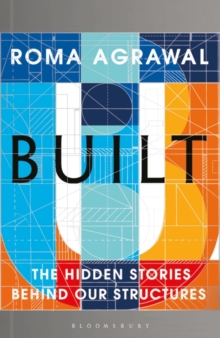
Built by Roma Agrawal

Shortlisted for The Jhalak Prize
The Jhalak Prize for Book of the Year by a Writer of Colour, is an annual literary prize awarded to British or British-resident writers. It is the first and only literary prize in the UK to only accept entries by writers of colour.

Reviewer: Catriona Troth

What We Thought:

The opening lines of this book sent me straight back to an afternoon years ago when I was doing my A Levels. On Friday afternoons, we would periodically have speakers come in to talk to us on something our teachers thought would interest us. I don’t think any of us were particularly enthused at the prospect of a talk on the history of London Bridge – yet by the end of that afternoon, half the year group were studying their UCAS forms and wondering if they could change to studying Civil Engineering.

Roma Agrawal’s Built is full of the same infectious enthusiasm. A structural engineer who has worked on bridges and buildings including London’s iconic Shard, she takes you on a journey under the skin of city skylines and deep into their infrastructure. She shows how engineers use physics and maths to grapple with the complex intersection of forces from gravity and wind. She explains the difference between load bearing and frame bearing constructions, between tension and compression. She studies the nature of brick and steel and concrete and how those three materials determine so much of our built environment. She compares buildings that rely for their strength on an inner core to those that use an exoskeleton. She shows how the world’s tallest buildings have to be damped to prevent them from swaying. She explores at the challenges involved in providing our buildings with water and in taking away our waste.

In doing so, she looks at structures that have suffered catastrophic failure and others that have survived thousands of years. She takes us from the Taipei Tower in Taiwan, to an underground city in Anatolia; from a bridge in Japan that is a modern development of the ancient rope bridge, to a Cathedral in Mexico City that has been saved from collapse due to subsidence. (And imagine my delight when a run-through of five of her favourite bridges takes in Old London Bridge.)

Towards the end, she peers into the future of our built environment, imagining the possibilities opened up by developments such as 3D printing, bio-mimicry and self-healing materials.

This book was a joy to read! All the principles are explained simply and accessibly (with diagrams). And even if you don’t grasp some of the details, enthusiasm and wonder will carry you through. Agrawal will leave you with a profound respect for engineers and the magic they weave – magic that most of us scarcely give a passing thought to as we go about our daily lives.


You’ll Enjoy This If You Loved: The Science of the Discworld series; Bill Bryson; Jared Diamond; Jacob Bronowski

Avoid If You Dislike: Getting excited about science and engineering

Perfect Accompaniment: A glass of bubbly to toast the minds behind some of the world’s greatest buildings

Genre: Non-Fiction.

Available on Amazon

Wednesday, 3 April 2019

My Conversations with Canadians by Lee Maracle

Reviewer: Catriona Troth

What We Thought:

“The question of why settler Canadians get a better life off my continent does not pop into white men’s heads, nor into the heads of other nice white women either.”

Like Why I Am Not Talking to White People About Race, and Between the World and Me, My Conversations with Canadians is a challenge to the dominant social group – most especially those who consider themselves to be liberal and enlightened – to wake up and realise the harm they are unwittingly doing.

Maracle is a member of the Stó:lō Nation, part of the Coastal Salish Confederacy, from the Fraser Valley region of British Colombia; the daughter of a Métis mother and Salish father. As well as being an author and a poet, Maracle is an Instructor in Indigenous Nations Studies at the University of Toronto and a Traditional Teacher at First Nations House

To being with, she quietly demolishes the illusions of Canadians like me of being the ‘nice’ settlers.

“In line with having no clue about their world, Canadians continue to insist that they are ‘better then America.”

Yet American reservations are on average 300 times the size of Canadian reserves. Canada’s residential school programme has been recognised as an act of cultural genocide. Indigenous women continue to be murdered at a rate of four times that of any other ethnic group. Indigenous children are still taken into care at a disproportionate rate.

The chapter that spoke particularly strongly to me was the one about Cultural Appropriation. This is a term that has been treated with undisguised contempt by some in the literary and art worlds. Maracle explains how, among her people, land and physical objects were not considered that property of individuals but something over which they shared stewardship. Knowledge, on the other hand, was personal. You passed it on the members of your family – but you traded for it with those outside your family. And knowledge was not written down but passed on orally, often in the form of story. People were trained in the art of remembering to ensure accuracy.

“Colonial white society assigned itself some crazy Knower’s Chair and handed white people the authority to sit in it They alone get to sit in this chair and decide what is true knowledge and what is false.”

When the white settlers came along, they took what knowledge it suited them and wrote it down. They packaged it up in books and university courses that had to be paid for. At the same time, they separated indigenous children from their parents and grandparents through the residential schools system, thus destroying the natural flow of knowledge down through families, forcing them to buy it back from the settlers who had appropriated it.

Small wonder then, that now First Nations people have the opportunity to revive their traditional skills, knowledge and languages, they are wary of settlers who once again want to repackage these things for commercial gain.

Since 2008, Canada has been going through a process of Truth and Reconciliation. When asked what reconciliation means to her, Maracle answers acerbically – “Well, stop killing us would be a good place to begin. Then maybe stop plundering our resources, stop robbing us of our children, end colonial domination – return our lands, and then maybe we can talk about being friends.”

And yet, it is clear that, despite everything, Maracle does want to find a route to that friendship.

“Some of our people wish Canadians would move back to their original homelands. Not me – I hope they fall in love with the land the way I have – fully, responsibly and committed for life.”

You’ll Enjoy This If You Loved: Why I Am Not Talking To White People About Race by Renni Eddo Lodge, Between the World and Me by Ta-Nehisi Coates

Avoid If You Dislike: Checking Your Privilege

Perfect Accompaniment: A willingness to give up the Knower’s Chair.

Genre: Non-fiction, Essays, Indigenous Writings

Available on Amazon

Friday, 4 January 2019

One Woman's Struggle in Iran by Nasrin Parvaz

Reviewer: Catriona Troth

What We Thought:

In 1979, Nasrin Parvaz returned from England, where she had been studying, and became a member of a socialist party in Iran fighting for a non-Islamic state in which women had the same rights as men. Three years later, at the age of 23, she was betrayed by a comrade and arrested by the regime’s secret police.

Nasrin spent the next eight years in Iran’s prison system. She was systematically tortured, threatened with execution, starved and forced to live in appalling, horribly overcrowded conditions. One Woman’s Struggle is both an account of what happened to her during those eight years, and evidence that her spirit was never broken.


One Woman’s Struggle is not an easy book to read. The opening chapters, which detail her interrogation under torture, are devastating. This is the reality of which dystopian depictions of totalitarianism, like V for Vendetta, merely skim the surface. Small wonder that many break under torture. Far more extraordinary are those who find within themselves the strength to endure.

Once the interrogations end, the hardships and degradations of daily prison life begin. The dirtiest trick of totalitarianism is to persuade its followers that those who it oppresses are no longer entirely human. The regime in Iran played this trick with brutal effectiveness. But Nasrin’s memoir also shows how the humanity of the women in prison nonetheless survived. It is a story of friendship and mutual support, of how the women drew strength from one another and found endless small ways to show kindness and even find tiny specks of joy.

The book begins and ends with fleeting encounter, when Nasrin recognises one of her tormentors in a London supermarket. The guard is terrified, but Nasrin turns and walks out into the spring sunshine.

Some things in Iran have changed since Nasrin was released. The interrogation centre where she was first held has been turned into a museum. School children are taken there on tours, but they are told that it was only used in the Shah’s time. Other things remain. In an echo of an incident described in the book, when international ambassadors visited Evin Prison earlier this year, political prisoners were hidden away where they could not be seen.

This book, however, is not simply about the prison system in Iran. It is about oppression – and especially the oppression of women – wherever it takes place. It deserves to stand with Primo Levi’s If This Is A Man as an indictment of cruelty, brutality and the dehumanising of fellow human beings.

You can read Catriona Troth's interview with Nasrin Parvaz on Words with Jam.

Parvaz has written a novel based on her experiences - The Secret Letters from X to A - which is also published by Victorina

You'll Enjoy This If You Loved: If This Is Man by Primo Levi, A Thousand Splendid Suns by Khaled Hosseini

Avoid If You Dislike: Reading details of torture

Perfect Accompaniment: A cup of tea and a donation to Freedom From Torture

Genre: Non-fiction, Memoir

Available on Amazon

Wednesday, 7 March 2018

Once Upon A Time in the East by Xiaolu Guo

Reviewer: Catriona Troth

What We Thought:

Shortlisted for the Jhalak Prize 2018, this is a memoir of growing up in China, of peasant existence in the 1970s, and the immense changes that have swept over China since the end of the Cultural Revolution. It is also the story of a struggle to develop an identity and a creative voice, first in a collective society, and then later, marooned and isolated as an immigrant in a foreign country.

The memoir overlaps, chronologically, with Madeleine Thien’s sweeping epic, Do Not Say We Have Nothing. But Xiaolu Guo’s family was not one with a long cultural and artistic heritage. Although her father was a state-sanctioned artist, for the most part, her family were illiterate peasants and fishermen, living in the rural and industrial fringes of China, far away from the cultural centres of Shanghai and Beijing.

Despite the declared feminism of Communist doctrine, this was a society where women were treated brutally. Domestic and sexual abuse was rife. Her grandmother, who brought her up for the first few years of her life, was regularly and savagely beaten by her grandfather, and nobody thought it was anything unusual. And when Xiaolu speaks up about her own sexual abuse at the hands of a colleague of her father’s, she finds every one of her university dorm-mates has a parallel story to tell.

Fascinating as Guo’s account of her life in China is, it is her struggle to find a creative voice in a strange country and in an unknown tongue that I found most absorbing. It always seems extraordinary to us stubbornly monoglot Anglophones when someone expresses themselves creatively in a language they did not grow up with. But the gulf that Guo had to cross was far more than merely linguistic. It required an entirely new mode of thinking.

“How could someone who had grown up in a collective society get used to using the first person singular all the time? The habitual use of ‘I’ requires thinking of yourself as a separate entity in a society of separate entities.”

I haven’t read any of Guo’s novels, but I am excited to try one now.

You’ll Enjoy This If You Loved: Do Not Say We Have Nothing by Madeleine Thien, Wild Swans by Jung Chang

Avoid if You Dislike: Frank discussion of sexual and domestic abuse

Perfect Accompaniment: Noodles and tofu

Genre: Autobiography, Memoir, Non-Fiction

Available on Amazon