Friday, 11 March 2022

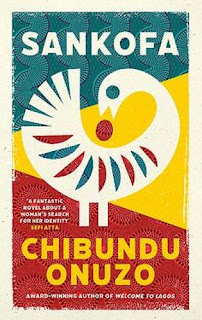
Sankofa by Chibundu Onuzo


Reviewer: Catriona Troth

What We Thought of It:

“You came to meet a man in the past. There is a mythical bird we have here, Anna. We call it Sankofa. It flies forward with its head facing backwards. It’s a poetic image, but it cannot work in real life.”

Clearing out the house after the death of her mother, Anna comes across a notebook written by the father she never knew. Written when he was a young African student on the fringes of radical politics, it reveals a story she was never told – of how her parents met. Yet it ends abruptly, without explanation as to why he left and never came back.

With these clues to go on, she begins to research his name, and discovers to her shock that her father became the first President of Bamana, the country of his birth. And that his legacy is anything but straightforward.

She first tracks down the British academic who wrote his biography and then, with great trepidation, travels to Bamana to confront her father and learn something about her own identity. But Anna finds herself an obroni (foreigner) in Bamana, out of her depth, pulled in different directions, judging the country – and her father – with European eyes.

Initially suspicious, her father – still a powerful and wealthy man – makes her a Bamanan citizen and then takes her to his country home, an estate where he wields enormous power and where they call him Daasebre: “we cannot thank you enough”.

But other members of the family are less than happy at the appearance of this previously unknown eldest daughter from England. And when Anna begins to challenge some of her father’s actions, things get complicated. Is there a way for Anna to find a reconciliation between the two parts of herself?

Sankofa is an exploration of how identity impacts those of African heritage, of the complicated relationship between Europe and Africa and how it affects them, their values and their sense of self. Onuzo, like Anna, challenges both European and African standards and assumptions.

You’ll Enjoy This If You Loved: When We Speak of Nothing by Olumide Poloola; Admiring Silence by Abdulrazak Gurnah; The Private Joys of Nnenna Maloney by Okechukwu Nzelu; Brit(ish) by Afua Hirsch

Avoid If You Dislike: Fictionalised versions of Africa

Perfect Accompaniment: A bottle of ice cold water and a sketchpad and paints

Genre: Contemporary, Literary

Buy This Book Here

Thursday, 10 March 2022

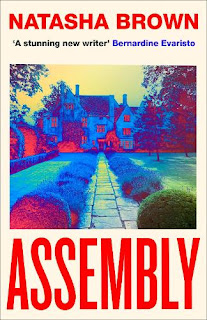
Assembly by Natasha Brown


Reviewer:
Catriona Troth

What We Thought of It:

The protagonist of Natasha Brown’s Assembly is, to all outward appearances, a success story. Despite her background, despite the colour of her skin, she has ‘made it’. She has a good degree from a prestigious university, a well-paid high-flying job, a relationship with the kind of man who gives her entrée into British society. She is invited to give talks to young women in schools, to inspire them:

The diversity must be seen. How many young woman and girls have I lied to? How many have seen my grinning face advocating for this or that firm, or this industry, or that university, this life?

But what no one else knows is that she has just received a cancer diagnosis. A cancer that will, without treatment, inevitably kill her. A treatment that she has decided to refuse.

Through the weave of the narrative, the cancer becomes a metaphor for racism, her refusal of treatment a refusal of complicity. A refusal to accept ‘diversity’ and ‘tokenism’ as a sticking plaster in place of rooting out racism and inequality.

Surviving makes me a participant in their narrative. Succeed or fail, my existence only reinforces this construct. I reject it. I reject these options. I reject this life. Yes, I understand the pain. The pain is transformational – transcendent – the undoing of construction. A return, mercifully, to dust.

Brown takes aim at the smug liberality that congratulates itself for the success of a few Black faces while at the same time:

We have seen now, just as then, the readiness of this government and its enterprising Home Secretary to destroy paper, our records and proof. What is citizenship when you’ve watched screaming Go home vans crawl your street? […] When British, reduced to paper, is swept aside and trodden over?

Assembly is short, slim even for a novella. But Brown’s excoriating prose punches well above its slender weight.

You’ll Enjoy This If You Loved: Exquisite Cadavers by Meena Kandasamy; That Reminds Me by Derek Owusu;

Avoid If You Dislike: Fragmented narratives

Perfect Accompaniment: Tea and toast

Genre: Literary Fiction

Buy This Book Here

Tuesday, 8 March 2022

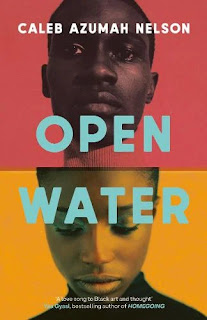
Open Water by Caleb Azumah Nelson


Reviewer:
Catriona Troth

What We Thought of It:


Open Water is an astonishing love story – delicate, tender, sensual, intimate.

It is written in the second person – an unknown narrator addressing the male protagonist, a young Black man, throughout as ‘you’. Whoever this narrator is, they are privy to the man’s deepest and most private thoughts and emotions. As readers, we find ourselves at once deep inside the protagonist’s head, and yet at one critical remove from it – a clever, challenging and at times unsettling balancing act.

The man meets the women he falls in love with at a party, when she is still in a relationship with a friend of his. He is a photographer, she a dancer. The connection is immediate and intense, and though neither of them makes a move to act upon it, the electricity between them is enough to fracture her previous relationship.

For a long time, they remain as intimate friends, though the direction of travel of their relationship feels inevitable. Nelson’s descriptions of the slow graceful process of surrendering to love are exquisite:

You’re like a pair of jazz musicians, forever improvising. Or perhaps you are not musicians, but your love manifests in the music. Sometimes, your head tucked into her neck, you can feel her heartbeat thudding like a kick drum. Your smiles a grand piano, the glint in her eye like the twinkle of hands caressing ivory keys.

Yet overshadowing everything is the ugly beat of racism, threatening to warp something inside him.

We are all hurting, you said. We are all trying to love, to breathe, and find ourselves stopped by that which is out of our control. We find ourselves unseen. We find ourselves. Unheard. We find ourselves mislabelled. We who are loud and angry, we who are bold and brash. We who are Black. We find ourselves not saying it how it is. We find ourselves scared. We find ourselves suppressed, you said.

Could this ugliness destroy what is beautiful between them? Even though she knows its poison as well has he does? And if so, is there any way back?

This is prose, but wall between it and poetry is gossamer thin. Each word has been weighed carefully and chosen for its impact on the ear and mind of the reader. You don’t read about this relationship: you live it.

Winner of the 2021 Costa First Novel Award.  

You’ll Enjoy This If You Loved:
Who’s Loving You? (ed: Sareeta Domingo); Love after Love by Ingrid Persaud; The Gift of Looking Closely by Al Brookes

Avoid If You Dislike: Second Person Narratives

Perfect Accompaniment: 'Brenda' by Isaiah Rashad

Genre: Literary Fiction, Romance

Buy This Book Here

Monday, 7 March 2022

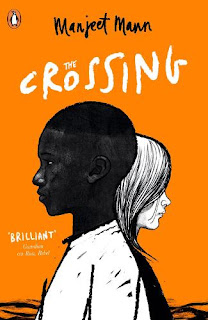
The Crossing by Manjeet Mann


Reviewer:
Catriona Troth

What We Thought of It:

Manjeet Mann’s heartbreakingly beautiful verse novella is a book you will never forget.

Written in a form more familiar in music – where two voices sing (or in this case speak) in counterpoint but not in dialogue – it tells the story of two teenagers, Sammy and Nat.

Nat is a teenager from the south coast of England. She has just lost her mother, and with it so much else. Even her passion for swimming in the sea has turned into a dread of the water.

Half a world away, Sammy is in Eritrea, facing a conscription that is in essence a form of bonded labour with no fixed end point. His only choice is to face a difficult journey out of the country to try and reach the safety he believes he can find in Europe.

We die if we stay, we die if we get caught, we might die in the Sahara, we might die in the sea. But one thing is certain: if we escape – we live.

Written in free verse, the last few words of each section become the first few words of the next, weaving the two voices together as the narrative passes back and forth between them. As Sammy’s journey brings him, step by step, towards the French coast, Nat begins to train to do a cross-channel swim to raise money for refugees. But not everyone in her family supports what she is doing.

I guess migration is only a human right if you’re the right type of human.

In this short and simple text Mann succeeds in illuminating an astonishing range of issues. From Sammy’s story we learn of the often-misunderstood motives that drive young people to flee their homes, the horrors of the journey they undertake, the cruelty of the smugglers who exploit their desperation, and the cold indifference of the bureaucracy that meets them at the edge of freedom. From Nat’s story, we learn of the grinding nature of austerity that leaves some as easy prey to extremists, the trap of white saviourism, and what it takes to be a true ally.

You’ll Enjoy This If You Loved:
Boy, Everywhere by A. M. Dassu; What Strange Paradise by Omar El Akkad; Black Flamingo by Dean Atta,

Avoid If You Dislike: Free verse

Perfect Accompaniment: A walk by the edge of the sea

Genre: Young Adult, Poetry

Buy This Book Here

Thursday, 16 December 2021

Books of the Year 2021

2021 been another incredibly difficult year for so many. Some of our Books of the Year confront those difficulties head on - others offer a glorious escape. All are jewels in their own right.  

With links to our full reviews.


Mrs Death Misses Death by Salena Godden


How do you even begin to talk about a book like Mrs Death Misses Death? It is a book that defies description, let alone comparison.

It is, at its core, an uplifting meditation on the nature of death. Structured more like a mind-map than a novel, it branches out in multiple directions, using poetry and prose, narrative, monologues and conversations.

The book captures the sense of existential crisis so many of us felt, even before Covid-19 took over our lives. “What is wrong with everyone?” Wolf rails. “I am not catastrophising. This is a f*** catastrophe. […] Maybe I’m crying because you aren’t crying with me right now, because you just aren’t mad enough.”

But the book is also incredibly life affirming. Because if life is short and death is inevitable, then is up to us to live it in the best way be can. As Mrs Death exhorts us, “you all need to be heroes, to step up, to speak up, to support each other.”

https://bookmuseuk.blogspot.com/2021/02/mrs-death-misses-death-by-salena-godden.html


And the Stars Were Burning Brightly by Danielle Jawando


And The Stars Were Burning Brightly shows, with deep compassion, how suicide, especially unexplained suicide, tears a hole through the hearts of friends and family. Nate is an utterly believable character; it is impossible to read this and not care about him deeply. Al too comes to vivid life on the page, despite the fact he dies three days before the story opens.

Jawando brilliantly captures the way that social media can come to dominate the lives of young people: from unrealistic body images it portrays, to the compulsion to share every minute of every day, the constant intrusion of notifications – and above all the savage cruelty that at times it unleashes and enables.

Yet the author also shows how the internet allows voices to be raised up and shared across the world.

And the Stars Were Burning Brightly is an extraordinary book that highlights the appalling and relentless pressures that can be piled onto teenagers in this age of social media. It comes as no surprise to learn that the novel is based in part on the author’s own lived experience.

https://bookmuseuk.blogspot.com/2021/04/and-stars-were-burning-brightly-by.html


First Woman by Jennifer Nansubuga Makumbi


Set in Uganda during the time of Idi Amin, the Ugandan-Tanzanian War and their aftermath, The First Woman is the story of Kirabo, a young woman from a rural community walking a tightrope between tradition, Europeanisation, and Amin’s despotism.

Makumbi’s masterful text manages to balance regret for the loss of what was good in traditions driven out by Christianity and Europeanisation, with a trenchant critique of the patriarchy and internalised misogyny embedded in traditional Ugandan communities.

Just as the oral story-telling traditions the young Kirabo aspired to wove life-lessons into spell-binding tales, Makumbi weaves commentaries on colonialism, patriarchy, colourism and internalised misogyny into this tender coming of age story.

Winner of the 2021 Jhalak Prize.

https://bookmuseuk.blogspot.com/2021/04/the-first-woman-by-jennifer-nansubuga.html


The Yield by Tara June Winch


After a long absence, August is returning to her home in Massacre Plains, a remote part of central Australia, to attend the funeral of her grandfather, Poppy Albert. But when she gets there, she finds that even her families last fragile hold on what used to be their ancestral land is threatened by the development of a tin mine.

Written by indigenous author, Tara June Winch, The Yield explores the intergenerational impact of colonialism – but this time through the lens of an Indigenous people who were all but wiped out by white settlers in the course of their insatiable land grab. It also reflects on how ignorance and the wilful rejection of traditional knowledge and practice has led to the destruction of a delicate ecological balance.

Achingly beautiful. A devastating tally of the cost paid by the relentless drive to expand European ‘civilisation,’ yet containing within it a small flame of hope that some of what has been lost can still reclaimed.

https://bookmuseuk.blogspot.com/2021/06/the-yield-by-tara-june-winch.html


At Night All Blood Is Black by David Diop, translated by Anna Moschovakis


At Night All Blood Is Black
is the English-language title of Frère d'âme (lit, “the brother of my soul”), a novel by the French author of Senegalese extraction, David Diop. With his English translator Anna Moschovakis, Diop won the 2021 International Booker Prize for this – the first French-language novelist to do so.

Set in the trenches of the First World War, the novel reveals the terrible damage war can wreck on the human mind – as well as reminding us that soldiers from colonised Africa (“chocolats” in the French slang of the time) were fighting and dying alongside white soldiers (“toubabs”).

Diop, and his translator, use extraordinarily beautiful language to paint a picture of the extreme ugliness of war. Alfa believes he betrayed his friend, but in truth, he, like the soldiers around him, have been betrayed by those who led them into war and who use them as human sacrifices in the interminable futility of trench warfare.

There have been so many novels set in those First World War trenches, that to write something new and unique is an extraordinary achievement. Diop may very well have done just that.

https://bookmuseuk.blogspot.com/2021/06/at-night-all-blood-is-black-by-david.html


A Kind of Spark by Elle McNicoll


A Kind of Spark
is a gem of a novel – one to break your heart, inspire you and fill you with joy.

The central character, Addie, is intelligent, curious, articulate and bursting with heart. She is also, like the author, autistic. That means that she can easily be overwhelmed – by sensory inputs and by emotions, both of which she feels with sometimes unbearable intensity.

When Addie begins to learn about the Scottish ‘witches’ – women persecuted for being different, just like her – she knows she needs to do something. In her own tiny village outside Edinburgh, there are records of women who were murdered on suspicion of being witches. Addie believes they should be remembered and honoured. But not everyone agrees.

A rare, profound and stereotype-free insight into what it can be like to experience our world as a neurodivergent person. McNicholl writes vividly, drawing on her own experience. Her passion, like Addie’s, is clear.

A book for anyone who wants to change the world a little bit – but especially for all the book-loving autistic girls out there, desperate to find themselves within the pages of a book.

https://bookmuseuk.blogspot.com/2021/07/a-kind-of-spark-by-elle-mcnicoll.html


How to Kidnap the Rich by Rahul Raina


In a year that has had more of its share of darkness, many of our books of the year also have dark themes. But here is something completely different: A glorious crime-caper romp wrapped up in a social satire.

Ramesh Kumar is a not quite a slum kid, but his life is pretty precarious - until, that is, the formidable Sister Claire takes him under his wing. For Ramesh is clever, very clever indeed. Clever enough that he begins taking exams for rich boys too lazy to study for themselves. It’s a nice little earner. Until one day he does just a little too well. He comes top in the All India’s – plunging his client, Rudi, into the national limelight.

The voice of Ramesh, as the first-person narrator of the tale, comes across loud and clear - and very funny. The prime target of his razor-sharp wit is the greed of modern Indian capitalism. But that doesn’t stop him taking some well-aimed swipes at the West, and especially the West’s infatuation with its own notion of ‘India’.

Quite the funniest book we read all year.

https://bookmuseuk.blogspot.com/2021/08/how-to-kidnap-rich-by-rahul-raina.html


The Fortune Men by Nadifa Mohamed


In 1952, merchant seaman and occasional petty thief, Mahmood Mattan is put on trial for the brutal murder of Cardiff shopkeeper Lily Volpert. You wouldn’t hang a dog on the evidence brought before the court – but Mahmood is a Black man in post-war south Wales. He was hanged on 3rd September 1952, the last person to be executed in Wales. Almost half a century later, he became the first person to have his conviction quashed under the newly established Criminal Cases Review Commission.

In this superb novel by Nadifa Mohamed, shortlisted for the 2021 Booker Prize, Mahmood Mattan is finally given the voice he was never afforded in life. We don’t simply walk beside him through the trial, onto death row and ultimately through the doors of the execution chamber: we are inside his mind. We inhabit his sense of his own innocence and his faith in British justice, his rage when it fails him, the meditative state he reaches (for a time) when contemplating his own death.

Deep as we are in Mahmood’s mind, the story is not told in the first person, and that gives us the perspective to see the myriad ways in which, in the context of entrenched attitudes, Mahmood becomes the author of his own destruction: when he lies and dissembles and pretends to be something he is not, when simple honesty might have served him better.

An exceptional novel, grounded in a little-known slice of British history, that lays bare the human consequences of racism and injustice.

Shortlisted for both the 2021 Booker Prize and the 2021 Costa Novel Award.

https://bookmuseuk.blogspot.com/2021/08/the-fortune-men-by-nadifa-mohamed.html


What Strange Paradise by Omar El Akkad

Our final Book of the Year could not be more timely.

Egyptian born Canadian Journalist Omar El Akkad took the terrible image of a child’s body washed up on the shores of a Greek island, and from it spun a modern fable.

Winner of this year’s Giller Award, What Strange Paradise is set on a fictionalised version of Crete, where the flora and fauna have been given a mythic quality that edges us away from realism.

The story is split into two interweaving parts. Before tells the story of how Amir comes to be an overcrowded boat crossing the Mediterranean. After takes us from the moment when, surrounded by dead bodies on the sand, he scrambles to his feet and runs for the woods. There he meets Vänna, a girl not much older than he is. Neither speaks the other's language, but bit by bit, they learn to communicate, as Vänna leads him across the island, to the promise of freedom.

A powerful laying bare of the human tragedies behind the statistics and rhetoric surrounding asylum seekers. El Akkad’s writing has a deceptive simplicity to it. El Akkad says that he drew inspiration in part from the story of Peter Pan. Its use of rhythm and repetition also echoes of traditions of oral storytelling. 

An important, beautiful and heart-rending story.

https://bookmuseuk.blogspot.com/2021/11/what-strange-paradise-by-omar-el-akkad.html

Monday, 13 December 2021

A Nest of Vipers by Catherine Johnson


Reviewer:
Catriona Troth

What We Thought of It:


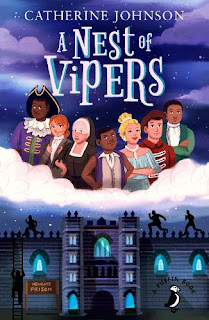
I grew up loving the novels of Leon Garfield – with a special fondness for Smith. Catherine Johnson’s A Nest of Vipers plunges the reader into the same world of 18th Century London – but populated this time with a rich cast of characters reflecting the diversity that most of us are only now learning was the reality in London at that time.

Cato is a member of a gang of con artists who live at the Nest of Vipers (‘the best inn in London’), making a living from tricking wealthy fools of their money. They are led by Mother Hopkins, who has taken them all under her wing and given them a home. But now she’s getting older and she dreams of one last con – one so big they will be able to escape London, buy a house in the country and live out their days in peace.

But things have got out of hand. Cato has been caught – his gang, who he thought of as family – apparently abandoning him to the hangman’s noose. All that is left for him now is to tell his story to the Ordinary of Newgate – the prison chaplain whose job it was to record the last words of condemned prisoners and then sell them to an eager public, like the true-crime podcasts of their day.

Full of humour, colour and rich historical detail. We visit the Frost Fair on a frozen River Thames and learn about the sedan chairs that were the antecedents of modern taxis. We also come face to face with the uncomfortable true that there were house slaves bought and sold in the middle of London itself, and made to wear silver collars as a badge of ownership.

A book to delight any young history buffs out there.

You’ll Enjoy This If You Loved: Freedom by Catherine Johnson; Smith by Leon Garfield; Black Hearts Over Battersea by Joan Aitkin; Black and British: a short essential history, by David Olusoga

Avoid If You Dislike:
Heroes from the wrong side of the law

Perfect Accompaniment: Hot pie with gravy.

Genre:
Middle Reader, Historical


Buy This Book Here:


Thursday, 9 December 2021

Lemon by Kwon Yeo-Sun; Translated by Janet Hong


Reviewer:
Catriona Troth

What We Thought of It:


“For over sixteen years, I’ve pondered, prodded, and worked every detail embroiled in the case known as ‘The High School Beauty Murder.’”


Lemon is a highly unusual psychological thriller, by Korean author Kwon Yeo-Sun.

Told from the perspective of three former schoolmates, it recounts the events around the brutal and unsolved murder of a fourth – a breathtakingly beautiful young woman called Kim Hae-on.

The three are Kim Hae-on’s younger sister, still obsessed with uncovering the truth of what happened; the troubled girlfriend of the one of the two chief suspects, and a third, who was in the same class as Kim Hae-on. Between the three of them we see partial, overlapping accounts of what happened, then and in the years that followed.

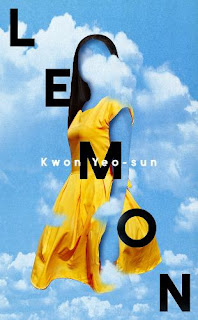
The mesmeric quality of Hae-on’s beauty is such that, even in life, she appears doll-like, perhaps even to herself. She seems only to exist in terms of the – often unhealthy - effect her beauty has on other people.

The colour yellow is a recurring note in the book - the yellow dress worn by the victim the day she died, and then later by her young sister; the yellow of the eggs yolks. The imagined revenge of a yellow angel...   

As the narrative proceeds, each new piece of the puzzle obscures as much as it reveals. It’s as if we are glimpsing things in fragments of a broken mirror. Even at the end of the book nothing is settled, nothing is sure – and as readers, we are left to piece together events and decide for ourselves whether or not we have understood who the real murderer is.

This is a slim novel – you could read it in a couple of sittings. But while each character may be sparing in terms of what they reveal in facts, they expose themselves, in what they say and in what they choose not to disclose.

Intriguing, illusive. Not quite like anything else I’ve read – so often one of the chief pleasures of reading books in translation.

You’ll Enjoy This If You Loved: What’s Left of Me is Yours by Stephanie Scott; Ponti by Sharlene Teo

Avoid If You Dislike: Unresolved endings.

Perfect Accompaniment: 'Han o Baek Nyeon,' song by Aeran Oh

Genre: Psychological Thriller, In Translation


Buy This Book Here: