Showing posts with label Young Adult. Show all posts

Wednesday, 27 April 2022

Lionheart Girl by Yaba Badoe


Reviewer:
Catriona Troth

What We Thought of It:

This is my home, yet I have to tell you plain-plain, my corner of the world is an inside-out, upside-down, twist-in-time place where strange things happen.

Sheba has been brought up by her grandmother and aunts – a family of women with magic in their fingers in a village in West African. Founded to protect those escaping from the slave traders, it has remained invisible for centuries and can only be discovered by those in the direst need. They live in a house without men, watched over by the spirit of Sheba’s grandfather, the chief Nana Gyata su, who can be seen at times walking the corridors of the house in the shape of a lion.

Sheba, like the rest of her family, has a gift. When she touches someone’s hair, to braid it and style it, she can read their memories and sense their innermost thoughts. But the most powerful of them all may be Sheba’s mother, the terrifying Sika, who can summon crows to do her bidding, and whose magic is far darker and more dangerous.

Sheba and her friends must reach deep within themselves to stop Sika destroying their village, and to protect themselves from getting sucked into her darkness.

The story is grounded in West African mythology, but there are also elements here of contemporary reality. Yaba Badoe is a Ghanaian-British documentary film maker. In 2011, she produced the film, The Witches of Gambaga, which tells the story of women in Ghana who have been accused of witchcraft and who have found sanctuary in the town on Gambaga in the north of the country.

The book is beautifully illustrated with delicate, shadowy images of trees, feathers, lions, and also with Adinkra symbols – Ghanaian designs used in fabrics and pottery, that each represent an abstract concept such as truth, strength and independence.

A story of courage and friendship and reaching deep inside yourself to find out who you really are.  

Longlisted for the 2022 Children’s and YA Jhalak Prize.

You’ll Enjoy This If You Loved: Children of Blood and Bone by Tomi Adeyemi; The Marrow Thieves by Cherie Dimaline

Avoid If You Dislike: Dark fantasy

Perfect Accompaniment: Tilapia grilled on an open fire

Genre: Young Adult, Fantasy, Magic realism

Buy This Book Here

Monday, 7 March 2022

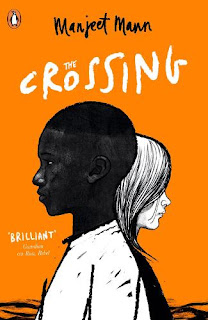
The Crossing by Manjeet Mann


Reviewer:
Catriona Troth

What We Thought of It:

Manjeet Mann’s heartbreakingly beautiful verse novella is a book you will never forget.

Written in a form more familiar in music – where two voices sing (or in this case speak) in counterpoint but not in dialogue – it tells the story of two teenagers, Sammy and Nat.

Nat is a teenager from the south coast of England. She has just lost her mother, and with it so much else. Even her passion for swimming in the sea has turned into a dread of the water.

Half a world away, Sammy is in Eritrea, facing a conscription that is in essence a form of bonded labour with no fixed end point. His only choice is to face a difficult journey out of the country to try and reach the safety he believes he can find in Europe.

We die if we stay, we die if we get caught, we might die in the Sahara, we might die in the sea. But one thing is certain: if we escape – we live.

Written in free verse, the last few words of each section become the first few words of the next, weaving the two voices together as the narrative passes back and forth between them. As Sammy’s journey brings him, step by step, towards the French coast, Nat begins to train to do a cross-channel swim to raise money for refugees. But not everyone in her family supports what she is doing.

I guess migration is only a human right if you’re the right type of human.

In this short and simple text Mann succeeds in illuminating an astonishing range of issues. From Sammy’s story we learn of the often-misunderstood motives that drive young people to flee their homes, the horrors of the journey they undertake, the cruelty of the smugglers who exploit their desperation, and the cold indifference of the bureaucracy that meets them at the edge of freedom. From Nat’s story, we learn of the grinding nature of austerity that leaves some as easy prey to extremists, the trap of white saviourism, and what it takes to be a true ally.

You’ll Enjoy This If You Loved:
Boy, Everywhere by A. M. Dassu; What Strange Paradise by Omar El Akkad; Black Flamingo by Dean Atta,

Avoid If You Dislike: Free verse

Perfect Accompaniment: A walk by the edge of the sea

Genre: Young Adult, Poetry

Buy This Book Here

Wednesday, 1 September 2021

Splinters of Sunshine by Patrice Lawrence


Reviewer:
Catriona Troth

What We Thought of It:

Dandelions close at night and open again in the morning, like they’re holding in the sunshine. Some dandelions have two hundred petals. The most I ever counted was a hundred and eighty. It’s like the sun broke into thousands of pieces so everyone can have some shine.

Splinters of Sunshine is the latest YA novel from the award-winning author Patrice Lawrence. Having won the inaugural Jhalak Prize for Children and Young Adults for her novel Eight Pieces of Silva, which dealt with exploitative relationships, Splinters of Sunshine takes on the highly pertinent issue of County Lines drug gangs.

County Lines refers to the practice of grooming vulnerable young people to move drugs from one area (and one police authority) to another in order to avoid detection. The young people involved are often, but not exclusively, in care.

A*student, Spey, used to have a best friend called Dee. She lived with her grandmother and she was obsessed with wildflowers – their names, their colours, the stories behind them. Once, on her sixth birthday, the two of them created a huge collage of flower pictures, and at the end of the day they cut it in two and took one half each. But then Dee’s Nan died, Spey and his mother moved away, and they lost touch.

Spey saw her once or twice after that – just enough to have an uneasy feeling she might be in trouble. But he did nothing (what could he do?). But then, one day, just after Christmas, he receives an envelope, forwarded from his old address, with Dee’s half of the collage in it. And he knows he has to do something to find her.

Spey’s father, who he barely knows, is just out of prison. Spey doesn’t really want anything to do with him. But maybe, just maybe, he is the one person who can help.

This is a heart-breaking story of the exploitation of young people. But it is also a story of courage and resilience and friendship. As with all of Patrice Lawrence’s novels, she tackles contemporary issues with compassion and sensitivity. It’s a book to start a conversation on difficult issues – but that never gets in the way of a great, page-turning story.

Spey and Dee are characters that will creep into your heart and stay there forever.

Beautifully illustrated, too, with line drawings of Dee’s favourite flowers, with their scientific and common names – names which are steeped in folk history. (The cover and illustrations are designed by Michelle Brackenborough at Hachette Kids.)

At the end of the book, resources can be found to support care-leavers, children of prisoners, and those affected by gangs and county lines.


You’ll Enjoy This If You Loved: Eight Pieces of Silva by Patrice Lawrence; And the Stars Were Burning Brightly by Danielle Jawando; Boy, Everywhere by A. M. Dassu; Wonderland by Juno Dawson

Avoid If You Dislike: Confronting issues around drug culture

Perfect Accompaniment:
A quiet hour in a wildflower meadow

Genre: Contemporary, Young Adult

Buy This Book Here:

Monday, 26 July 2021

A Kind of Spark by Elle McNicoll

Reviewer: Catriona Troth


What We Thought Of It:


A Kind of Spark is a gem of a novel – one to break your heart, inspire you and fill you with joy.

The central character, Addie, is intelligent, curious, articulate and bursting with heart. She is also, like the author, autistic. That means that she can easily be overwhelmed – by sensory inputs and by emotions, both of which she feels with sometimes unbearable intensity.

Like so many neurodivergent people – including Addie’s older sister, Keedie – Addie learns to deal with the outside world by ‘masking’, hiding who she is from the world on a daily, hourly, minute by minute basis. It’s exhausting.

But when Addie begins to learn about the Scottish ‘witches’ – women persecuted for being different, just like her – she knows she needs to do something. In her own tiny village outside Edinburgh, there are records of women who were murdered on suspicion of being witches. Addie believes they should be remembered and honoured. But not everyone agrees.

This is a book about standing up to bullies. About the determination to do the right thing. About facing up honestly to the wrongs of the past, and understanding that until we do so, we cannot effect real change.

It is also a rare, profound and stereotype-free insight into what it can be like to experience our world as a neurodivergent person. McNicholl writes vividly, drawing on her own experience. Her passion, like Addie’s, is clear.

A book for anyone who wants to change the world a little bit – but especially for all the book-loving autistic girls out there, desperate to find themselves within the pages of a book.

You’ll Enjoy This If You Loved: The Night Bus Hero by Onjali Rauf; Hetty Feather by Jacqueline Wilson

Avoid If You Dislike: Seeing the world in a whole new way

Perfect Accompaniment: Peace and quiet in the corner of a library

Genre: Young Adult


Buy This Book Here

Sunday, 11 April 2021

And the Stars Were Burning Brightly by Danielle Jawando


Reviewer:
Catriona Troth

What We Thought of It:

Nate’s big brother, Al, had so much to look forward to. He was a straight-A student, a talented artist, and had a conditional place at Cambridge University. So when he commits suicide, Nate, and his whole family, feel as though they have been shattered into pieces.

Nate is consumed with finding out why Al took his own life, even though his quest takes him into some increasingly dark places and everyone – even his mum and his older brother Saul – are begging his to stop.

The only other person who seems to understand is Megan, a friend of Al’s who shares Nate’s guilt for not doing enough to help Al when they still could.

And The Stars Were Burning Brightly shows, with deep compassion, how suicide, especially unexplained suicide, tears a hole through the hearts of friends and family. Nate is an utterly believable character; it is impossible to read this and not care about him deeply. Al too comes to vivid life on the page, despite the fact he dies three days before the story opens.

Jawando brilliantly captures the way that social media can come to dominate the lives of young people: from unrealistic body images it portrays, to the compulsion to share every minute of every day, the constant intrusion of notifications – and above all the savage cruelty that at times it unleashes and enables.

Yet the author also shows how the internet allows voices to be raised up and shared across the world.

And the Stars Were Burning Brightly is an extraordinary book that highlights the appalling and relentless pressures that can be piled onto teenagers in this age of social media. It comes as no surprise to learn that the novel is based in part on the author’s own lived experience.

I can imagine this book might be triggering for some, but for others, it may well help ease them through a difficult time, or to understand friends who are in a difficult place and need their support. It needs to be in every school library.

Shortlisted for the inaugural Jhalak Young Adult and Children’s Prize.

You’ll Enjoy This If You Loved: The Million Pieces of Neena Gill by Emma Smith Barton; Out of Heart by Irfan Master, Meat Market by Juno Dawson

Avoid If you Dislike: References to suicide and online bullying

Perfect Accompaniment: Images of the night sky 

Genre: Young Adult, Contemporary

Buy This Book Here:

Monday, 15 March 2021

Eight Pieces of Silva by Patrice Lawrence


Reviewer:
Catriona Troth

What We Thought of It:

What do you do if your mum and stepdad have just jetted off on honeymoon and your big step-sister, who is supposed to be looking after you, disappears?

This is the dilemma facing 16 year old Becks. Of course she could just kick back and enjoy the freedom, but she actually cares about Silva. And her instinct is telling her that something is very, very wrong. So she does the unthinkable and roots around in the forbidden territory of Silva’s room for clues.

What she finds only deepens the mystery. And now she has to wonder if she ever knew Silva at all.

Lawrence has written another wonderful, page-turning thriller. Her teenage protagonist is spikey, passionate, caring – sometimes blind to the obvious, but nonetheless determined to do the right thing.

At the centre of the mystery is an exploitative relationship – one that takes advantage of a vulnerable young woman, playing on her emotions with scant regard for the consequences. It may not be grooming as we read about it in tabloid headlines, but it’s nonetheless insidious and damaging.

Much as Becks feels herself to be alone, she does in fact have those around her who care about her and who will support her when she really needs it.

There is lots of wonderful detail here about teenage life (for which Lawrence credits her own teenage daughter). Becks is passionate about K-pop, Lord of the Rings and Black Panther. She is also into girls, which is never portrayed as an issue; it’s just a part of her identity. (Becks “didn't come out because she was never in.”)

A great book to open up conversations about healthy and unhealthy relationships. And just as importantly, a thoroughly gripping read. 

WINNER of the inaugural Jhalak Children's and Young Adult Prize.

You’ll Enjoy This If You Loved: Orangeboy by Patrice Lawrence, The Million Pieces of Neena Gill by Emma Smith-Barton, The Good Girl’s Guide to Murder by Holly Jackson

Avoid If You Dislike: Stories involving the loss of a parent

Perfect Accompaniment: K-pop and your favourite smoothie

Genre: Young Adult, LGBT, Contemporary, Thriller 

Buy This Book Here

Thursday, 3 December 2020

Cane Warriors by Alex Wheatle


Reviewer
: Catriona Troth

What We Thought of It:

Cane Warriors carves a story for young adults from the same dark material that gave us books such as The Long Song by Andrea Levy and Remembered by Yvonne Battle-Felton. This, however, is aimed at Young Adult readers.

The novel is rooted in the true story of Tacky’s War – an uprising of Akan slaves that took place in Jamaica in the summer of 1760.

It begins with Moa on the Frontier Plantation, being approached in the middle of the night.

“Louis’ thick fingers dug into my shoulder … ‘We is gonna bruk outta here ‘pon what de white man call Easter Sunday,’ he said, ‘T’ree days time.’”

The Akan people people were taken as slaves from what is now Ghana and Cote d’Ivoire. And the Frontier Plantation is a real place, not far from where Wheatle’s mother grew up.

Some readers may be shocked by the violence that ensues. But Wheatle doesn’t shrink from showing us the unrelenting cruelty and brutality that drove the slaves to such extremes. Nor does he pretend that such acts are without cost to those that undertake them.

Moa is only fourteen, an age at which we would now consider him a child soldier. Far from being forced to take part, however, Moa is repeatedly given the chance by the leaders of the rebellion to take a step back. That he chooses to stay – even though he is haunted by the horrors he has seen – is because each and every one is outweighed by the horrors he has seen perpetrated by the slave masters every day of his short life.

This is a time when the elder slaves on the plantation still maintain a connection to their African roots – striving to keep alive a memory of their language, their traditions and their gods. But that knowledge is fast dying out.

A novel about friendship, courage and sacrifice, and how those things can survive even in the face of unimaginable brutality. It also shows that the struggle against slavery and the slave trade did not begin and end in British courtrooms or the battlefields of the American Civil War. As Wheatle reminds us in his foreword, Tacky’s War was only the beginning. Slaves fought for their freedom in subsequent uprisings in Haiti, Grenada, Barbados and again in Jamaica.

By telling the story from the close point of view of one teenager, Wheatle transforms a powerful history lesson into a heartbreaking, page-turning narrative. 

Longlisted for the inaugural Jhalak Children and Young Adult Prize

You’ll Enjoy This If You Loved: Freedom by Catherine Johnson

Avoid If You Dislike: Frank depictions of brutal violence

Perfect Accompaniment: roast chicken with mango, guava and soursop

Genre: Young Adult, Historical Fiction

Buy This Book Here

Thursday, 29 October 2020

Boy, Everywhere by A. M. Dassu


Reviewer:
Catriona Troth

What We Thought Of It

Onjali Rauf’s wonderful The Boy at the Back of the Class has done an incredible job of raising awareness among younger children of what it means to be a refugee. But if there was one small criticism that arguably could be levelled at it, it was that it centred the British children in the class and not the refugee child himself.

A. M. Dassu’s Boy, Everywhere, aimed at slightly older children, makes Sami, the Syrian child forced to flee his country because of civil war, the very heart and centre of the story.

Sami’s life in the opening pages of the book could be the life of a middle-class child anywhere in Europe or North America. He plays on his Xbox and worries about having the latest football boots. His biggest worries are boring school lessons and defending his best mate from the class bully.

The war has been going on in the rest of Syria for a while now, but life in Damascus hasn't changed much. Sami never imagines the war will really affect him. But then one day a bomb goes off that destroys a big shopping mall, narrowly avoiding killing Sami’s mother and leaving his five-year-old sister traumatised. Sami’s parents realise they have no choice but to leave Syria and to try and reach a safe country.

Boy, Everywhere is the story of Sami’s perilous journey from Syria to the UK and what happens to him and his family once they arrive Manchester. It’s a tough story, based on first-person accounts from other young people who have made the journey.

At every turn it demolishes myths about asylum seekers. It shows what it means to put your lives in the hands of smugglers, to survive terrifying boat crossings, to arrive in the UK only to be locked up in a detention centre with other desperate people – and then when you finally begin to make a life for yourself in your new country, to face bigotry and rejection.

Sami is angry and frustrated as any teenager would be at being torn from his home and his friends. But he is terrified and guilty and confused. To read his story is to want to shelter and protect him. And there are so many Samis out there.

A heart-rending story that will open your eyes to the reality of what refugees face on their journeys here and when they arrive – and why they are fleeing their countries in the first place.

You’ll Enjoy This If You Loved: The Boy at the Back of the Class by Onjali Rauf.

Avoid If You Dislike: Graphic accounts of the dangers faced by refugee families

Perfect Accompaniment: Maqluba (“upside down”) a Syrian dish of meat, rice and vegetables

Genre: Older children and Young Teens; Contemporary 

Thursday, 15 October 2020

Tamarind and the Star of Ishta by Jasbinder Bilan


Reviewer:
Catriona Troth

What We Thought Of It:

Like Bilan’s debut novel, Asha and the Spirit Bird, Tamarind and the Star of Ishta is set in the north of India. Unlike Asha, though, Tamarind, the heroine of the book, is an outsider here. Thought she was born in her grandmother’s beautiful summer house in the cool hills below the Himalaya mountains, her father took her away when she was still a baby to live in Bristol, and they have never been back. Now, at eleven years old, she is meeting her mother’s family for the first time. And two questions burn:

What happened to her mother? And why will no one talk about her?

Like Asha and the Spirit Bird, this is a book a communion between generations and beyond the barriers of life and death. It celebrates magic and innocence and friendship.

Bilan captures the strangeness and joy for immigrant children experiencing their parents’ home country for the first time. New foods. Different customs. Relatives who act like they’ve always known you when you’ve only just met. And that one cousin who seems to resent your very presence…

Then there is the mystery of her mother. At first, Tam seems no closer to finding out anything about her. Everyone here seems to think it’s too sad to talk about too. But what about Ishta, the girl she meets in the garden at night, when she really isn’t supposed to be out there at all?

This is a tender book, laced through with a very particular kind of magic, and one that, at the right moment, might help a child coming to terms with the loss of a parent, especially one they have never really known. For others, it is another lyrical evocation of the high hills in the north of India.

You’ll Enjoy This If You Loved: Asha and the Spirit Bird by Jasbinder Bilan, The Island at the End of Everything by Kiran Millwood Hargrave

Avoid If You Dislike: Stories involving the loss of a parent.

Perfect Accompaniment: Potato and pea samosa with a touch of cardamom

Genre:
Children and YA (Middle Reader)

Buy This Book Here

Thursday, 24 September 2020

Meat Market by Juno Dawson


Reviewer:
David C Dawson

What we thought:

I was excited to read another Juno Dawson novel, especially one that scooped the YA Book Prize in 2020. Dawson has become the most prolifically original YA writer in the UK since her debut novel Hollow Pike in 2012. Could Meat Market deliver the punch of Clean or the wit of Wonderland?

Yes, on both counts. Meat Market is a moving, funny and ultimately uplifting attack on the excesses of the fashion industry.

Jana Novak is a gawky sixteen-year-old about to start her A-levels. She’s the tall, skinny, awkward girl who, when her class performed “An English Country Garden” in front of the whole school, was told to be play a weed.

While on a school trip to Thorpe Park she’s talent spotted by a model agency. With the support of her mum, Jana signs up enthusiastically for what she expects to be a life of glamour and riches.

Jana’s new life starts off glamorous, and she earns more on one assignment than her father earns in a year. But her life quickly tarnishes, and she’s subjected to long working hours, lonely nights staying in hotels and alienation from her schoolfriends.

Meat Market is a sharply incisive story that warns of the exploitation of young, vulnerable people in the fashion industry. As ever, Dawson is not shy of tackling difficult subject matter head on, from the way that sudden wealth distorts a young person’s life, to the difficulties women face in challenging decades of acceptance of sexual abuse by predatory men in positions of power.

As with all Dawson’s books that I’ve read, Meat Market’s opening is witty and funny. Dawson establishes the central characters’ motivations and values and it’s easy to empathise with them and their relationships.

Then Dawson piles on the jeopardy.

Meat Market becomes very dark when Jana is first seduced into drug taking and cheating on her boyfriend. Her lowest point comes when she’s sexually assaulted by a highly respected man in the fashion industry. The rest of the industry rushes to protect him. As Jana stands alone against her assailant she becomes the heroine of a #MeToo inspired plotline.

Highly recommended.

You’ll enjoy this if you like: Holly Jackson, Sophie McKenzie

Avoid if you don’t like: Some explicit sex, drug references, sexual assault description, eating disorder themes

Ideal accompaniments: Jam tarts

Genre: Young Adult, LGBTQ

Thursday, 18 June 2020

Wonderland by Juno Dawson


Reviewer: David C Dawson

What we thought:


Amazingly, this is Dawson’s (no relation!) twentieth young adult novel. I gave her debut novel Hollow Pike a rave review here on Bookmuse four years ago.

Dawson’s come a long way since her debut novel in 2012, both personally and in her writing. Wonderland has a hard edge to it, without losing the humour Dawson managed so well in her previous novels.

Alice Dodgson is a privileged young aspirant trans-woman who’s bored with the dreary academia of her expensive private school. Her friend Bunny has gone missing, and Alice goes to find her. That’s when she discovers the elite Wonderland Party, and meets a host of drug and sex addicted characters, including Dinah and the Tweedle Twins.

As you can probably tell already, the references to Lewis Carol’s classic children’s story are prolific, clever and witty. But Dawson uses the rough framework of Carol’s story to explore a host of complex issues, including sexuality, privilege, mental health, and drug taking. At times it’s a very dark and shocking read.

The issues Dawson tackles are highly relevant to young people today, and she deals with them in an honest, and emotionally mature way, which is so refreshing. At several points in the book my middle-aged, middle-class mind had to pause and ask the question: is this appropriate for a young adult? The answer came swiftly: definitely.

Dawson clearly draws on her experience as a trans-woman, and sections of the book feel almost autobiographical. But before you dismiss it as an angsty teenage read, let me reassure you that the writing is tight, and the plot is complex and intriguing.

Highly recommended.

You’ll enjoy this if you like: Holly Jackson, Sophie McKenzie

Avoid if you don’t like: Some explicit sex, drug references, suicide references

Ideal accompaniments: Jam tarts

Genre: Young Adult, LGBTQ

Buy This Book Here

Monday, 16 March 2020

The Black Flamingo by Dean Atta, illustrated by Anshika Khullar

Reviewer: Catriona Troth

What We Thought:

“Who is the Black Flamingo? ... He is me, who I have been, who I am, who I hope to become. Someone fabulous, wild and strong.”

Dean Atta’s The Black Flamingo is unlike anything else I have ever read - and I consumed it in two glorious gulps. A joyous celebratory prose poem, it follows the life of a mixed-race (Jamaican / Greek-Cypriot) gay man growing up in London – from a small boy longing for a Barbie to play with, through primary school and high school, to finding a home and family among the Drag Society at University.

It is a story of love and friendship, of acceptance and rejection. Of the complexities of identity. Of the intersections of racism and homophobia, and the strength it takes to overcome them and to be fully and freely yourself.

How to Come Out as Gay
Don’t.
Don’t come out unless you want to.
Don’t come out for anyone else’s sake
Don’t come out because you think society expects you to.
Come out for yourself.
Come out to yourself.


The simplicity of the language is deceptive. By allowing Michael/Michalis/Mikey/Mike to speak to us directly, in his own voice, whatever his age, Atta gives his words a heart-stopping immediacy, while at the same time exploring some profound ideas.

The text is dotted throughout with Anshika Khullar’s beautiful black and white illustrations, which seem to beckon you from page to page. There are WattsApp conversations and facsimiles of notebook pages. There are pages where the text is white on black.

An absolute joy to read – this is a book I’d like to put in the hands of every teenager and young person still trying to figure out who they are. It’s a celebration of acceptance, support and the pleasures of finding what Anna Madrigal would have called your logical family.

Longlisted for the 2020 Jhalak Prize.

You’ll Enjoy This If You Loved: The Perseverence by Raymond Antrobus, Jonny Appleseed by Joshua Whitehead, Moonlight (film)

Avoid If You Dislike: Prose poetry. Explorations of gender and sexuality (but I’d say give it a try anyway – you may surprise yourself!)

Perfect Accompaniment: Back to Black by Beyoncé

Genre: Defies classification. Poetry. Lit Fic. YA. LGBTIAQ+

Buy this book here

Tuesday, 22 October 2019

The Million Pieces of Neena Gill by Emma Smith Barton

Reviewer: Catriona Troth

What We Thought: 

I had the pleasure of hearing Emma Smith Barton read the opening to this, her debut novel, at the 2018 Asian Writer Festival. It perfectly encapsulates the close relationship between Neena and her older brother, as Akash comforts her in the garden while their parents argue loudly in the house. In doing so, it sets the scene for the rest of the book.

The story then fast forwards five years. The teenage Akash has disappeared and the family is broken. Neena, her GCSE exams fast approaching, is just about hanging on at school, but behind her parents’ backs she is going out drinking and partying. Her mother never leaves the house. And her father has become rigid, bordering on tyrannical.

This is the story of a family is broken by the loss of one of its members. In particular, it charts, in painful and believable detail, the mental breakdown Neena suffers under the pressures of grief, exams and the need to chart her own path between the conflicting expectations of her family and the world around her.

Neena is like so many teenagers – intelligent, creative and desperately confused. The loss of her brother has ripped a hole in her life.

“[Your] dreams, the belief that you will live them, propel you forward from day to day ... What part of that picture shatters, slips through your fingers like ice-cold water, you can lose yourself within that loss.”

Emma Smith-Barton knows what she is writing about. In her author’s note at the end, she tells us how she, like Neena, suffered from periods of intense anxiety as a child. And how she was inspired to write the book after nursing someone very close to her through a psychotic episode.

The need for a book like this can hardly be overstated. Recent research shows that one in eight school age young people in Britain today suffer from some form of diagnosable mental health condition. Neena gets the help she needs, but too many young people do not. Less than a third of young people referred to metal health services get treatment within a year. The Million Pieces of Neena Gill shows young people that they are not alone, that there is no such thing as ‘normal’ and that, when you are in crisis, there is a path to recovery.

A wonderful debut novel – a tender and sensitive approach to a difficult and necessary subject.

You’ll Enjoy This If You Loved: A Good Girl’s Guide to Murder by Holly Jackson, Ponti by Sharlene Teo, The Hate You Give by Angie Thomas, Son of a Trickster by Eden Robinson

Avoid If You Dislike: Charting the path through mental illness

Perfect Accompaniment: Halva with honey

Genre: Young Adult

Wednesday, 2 October 2019

A Good Girl's Guide to Murder by Holly Jackson

Reviewer: Catriona Troth

What We Thought:

There is a lesser known novel by Dorothy L Sayers called The Documents in the Case. The greater part of the book is made up of transcripts of interviews and affidavits handed over to an investigator after a coroner has delivered a verdict of accidental death that one person simply doesn’t believe.

Holly Jackson’s debut crime novel for young adults fits in this same tradition. In this case, a young man, Sal, is presumed to have committed suicide after murdering his girlfriend. Five years later, Pippa is doing her A Levels and has to pick a topic for her Extended Project. She knew Sal and never believed the verdict that everyone else in the town accepted. Under cover of research for her Extended Project, she sets out to prove he was innocent.

A Good Girl’s Guide to Murder is a genuinely tense and exciting read, especially once the real murderer cottons on to what Pippa is up to and the jeopardy ramps up. But she also brings in the human side of the miscarriage of justice – through Ravi, the brother of the supposed murderer, who has not only lost his brother, but has become an outcast by association.

As with The Documents in the Case, the narrative here is interspersed with interview transcripts, diary entries, maps, records of texts and other things that Pippa is recording in her research log. Jackson sets out the clues that enable the reader to follow Pippa’s investigation – teasing us with a range of suspects and neither flagging up the solution too early, nor pulling the wool over our eyes by withholding information. And she manages to avoid the biggest potential pitfall with having a teenage detective – that of falling right off a cliff edge of plausibility.

Being only a few years out of high school herself, Jackson presents a high school world that is grounded in contemporary reality – albeit that of the leafy shires rather than deprived inner cities. The issues her teenagers face are those many of her audience will recognise from their own school days. If I have one criticism, it would be that Jackson’s attempt to provide diversity in her cast of characters lacks real depth.

A promising and enjoyable debut from a young author.

You’ll Enjoy This If You Loved: The Documents in the Case by Dorothy L Sayers, Snow Angel by JJ Marsh

Avoid If You Dislike:
School kid detectives

Perfect Accompaniment: Tea and home-made muffins

Genre: Crime Fiction, Young Adult

Buy a copy here

Wednesday, 22 May 2019

The String Games by Gail Aldwin

Review by JJ Marsh

What we thought:

Nim’s family life is shifting. Dad has left and Mum’s happiness revolves around her new friend Dee. That summer holiday in France, Nim’s life changes forever. She notices boys. They notice her. Her little brother Josh is annoying and embarrassing and always underfoot. Until he disappears.

That childhood trauma imprints itself on her adult psyche, shrouding her outlook in grief and endless questions. Finally, she chooses to return to the scene and find some answers.

The String Games is aptly titled, drawing the reader into the world of Imogen/Nim, Josh and Maxime, while leaving us up in the air and uncertain. The reader feels every bit as clueless and on shifting sands as the characters themselves.

This is a psychological drama a cut above the average in that the story is more about reaction than action, process rather than procedure. Aldwin blends her dark and light with an artistic touch, leaving the reader with just enough detail to ask ‘What would I do?’


You’ll enjoy this if you liked: We Need to Talk About Kevin by Lionel Shriver, Spilt Milk by Amanda Hodgkinson, A Child in Time by Iain McEwan

Avoid if you don’t like: Long-term grief, loss, a child’s point of view

Ideal accompaniments: Vanilla ice cream, a cider shandy and Les Négresses Vertes with C’est pas la mer à boire

Genre: Literary fiction, Coming of Age


Available here


Friday, 22 March 2019

Children of Blood and Bone by Tomi Adeyemi

Reviewer: Catriona Troth

What We Thought:

Tomi Adeyemi is a part of a new wave of authors who – like Cherie Dimaline and Daniel Jose Older –are creating fantasy novels not rooted in Western European folklore and mythology but which draw upon their own particular heritage. In doing do, they are breathing a new and exciting life into the genre.

In Adeyemi’s case, this is a Yoruba heritage from Nigeria.

The story takes place in Orïsha, a beautiful but dystopian world, divided between dark-skinned, white haired divîners and the lighter skinned kosidán. The divîners were once majis, the descendents of ten clans who could control the natural forces of the world. But magic has been stolen from the world, destroyed by the King, Saran, who fears its power and hates those that wield it. And now divîners are little more than slaves, despised, abused – referred to as maggots.

But then the king’s daughter, Amari, finds there are three artefacts that could bring magic back into the world. When she stumbles into the arms of Zélie, the daughter of a powerful maji killed by Saran when he tried to wipe magic from the earth, the two of them may just have a chance to change Orïsha forever.

It is not only traditional Yoruba stories that Adeyemi has drawn on in creating this story. As she makes clear in her Afterword, everything that happens to her characters has been visited upon Black bodies in the not-so-distant past and much of it is still being visited upon them today.

No one is the villain of their own story. And some of the power of Adeyemi’s story telling is the credible fear of magic she creates through the point of view of Inan, Saran’s son and Amari’s sister. He too wants to change Orïsha, but his vision is very different from Zélie’s.

It is the mutual fear and distrust between divîners and kosidán– between those with the power to wield magic and those who have used brute force to suppress it – that will stand in the path of a new and more equal Orïsha.

A fresh new new voice in the fantasy genre - and a powerful and beautiful allegorical tale for our times.

You’ll Enjoy This If You Loved: The Marrow Thieves by Cherie Dimaline, Shadowshaper by Daniel Jose Older, The Hate U Give by Angie Thomas, The Island at the End of Everything by Kiran Millwood Hargrave

Avoid If You Dislike: Scenes of violence and torture

Perfect Accompaniment: Fried plantain and jollof rice

Genre: Young Adult, Fantasy

Available on Amazon

Monday, 18 March 2019

The Marrow Thieves by Cherie Dimaline

Reviewer: Catriona Troth

What We Thought:

“Dreams get caught in the webs woven in your bones. That’s where they live, in that marrow there.”

It’s the mid 21st Century and the world’s freshwater supplies have been polluted beyond repair. The icecaps have melted, swallowing both the coastal cities and much of traditional lands of indigenous people. And now people have stopped dreaming – all that is except indigenous people. Not being able to dream has induced a kind of madness – and the world has turned to indigenous people to try to find a cure. To begin with, they come with curiosity, seeking to learn. But then scientists discover that the secret may lie in bone marrow. And they will take it, by any means necessary.

Settlers turn back to the infamous system of residential schools, where children were snatched from their parents and housed far away, with the aim of stripping them of their Indian identity. Only now, what the revived ‘schools’ want to strip is bone marrow.

French and his brother have already lost their parents. They are running for their lives, using everything they have ever learnt to stay ahead of the terrifying Recruiters.

“It probably started with the first pop of air against metallic plastic, no louder than a champagne cork. I imagined the school truancy officers – Recruiters, we called them – coming for us, noses to the wind, sunglasses reflecting the row of house behind which we were nestled.”

French will lose more, and gain more, than he can possibly imagine before a reckoning becomes possible.

Cherie Dimaline is from the Georgian Bay Metis community in Canada. I suspect if a non-indigenous author had written about Ceremony (for example), they would have felt they had to describe and explain. Dimaline, by contrast, treats it as part of the fabric of life. She doesn’t need to spell it out; she concentrates instead on how her characters relate to it – emotionally, mentally and spiritually.

Dark as the central theme is, The Marrow Thieves is also about family – the families we are born into and the families we make for ourselves – about loyalty and sacrifice in extreme circumstances, and about the agonies and ecstasies of young love.

“How could anything be as bad as it was when this moment existed in the span of eternity? How could I have fear when this girl would allow me this close? How could anything matter but this small miracle of having someone I could love?”

The Marrow Thieves a truly terrifying dystopia that is also an indictment of the on-going exploitation of indigenous people by settler communities. It demonstrates how voices that have traditionally been ignored have entirely new stories to tell. And how important it is that those stories are told by those to whom they belong.

You’ll Enjoy This If You Loved: Technologies of the Self by Haris A Durrani, Shadow Shaper by Daniel Jose Older, Rats by JW Hicks, Indian Horse by Richard Wagamese.

Avoid If You Dislike: Post-apocalyptic dystopias

Perfect Accompaniment: A glass of fresh, clean water – while we still can!

Genre: Young Adult, SciFi


Available on Amazon

Thursday, 22 March 2018

The Hate U Give by Angie Thomas

Reviewer: Catriona Troth

What We Thought:

"I think we all wait for that one time, that one time when it ends right."

Starr remembers having ‘the talk’ with her parents – the talk every Black parent must have with their child, about what to do if you are stopped by the police.

“Starr-Starr, you do whatever they tell you to do. Keep your hands visible. Don’t make any sudden moves. Only speak when they speak to you.”

But either her friend, Khalil, never had the talk, or he didn’t pay attention.

The Hate U Give is a fictional account of what has become an all too common story – the shooting dead of a young black man by a police officer because he was wrongly perceived as a threat.

But this time there is a witness. Starr was in the car with Khalil when they were stopped. And Starr has a voice. A voice that is going to be heard.

Everyone has an opinion about Khalil, even if they’d never heard of him before the night of the shooting. Starr’s largely Black neighbourhood is ready to explode with anger. While to the white kids at her school, he’s either a drug dealer who got what was coming, or an excuse for a protest that gets them out of class. Can anyone – even her parents, ever her best friends, even her boyfriend – understand how she feels or who Khalil really was?

The novel is replete with details that sing of lived experience. From the attitude of her Black parents, and the role of the religion, to the tightrope Starr walks between her Black neighbourhood and her mostly white school. Thomas perfectly captures that stage of adolescence when the stubborn defiance is still all there, but awareness is growing that maybe you don’t quite know everything yet.

The title comes from a line written by the rapper, Tupac. ‘The hate u give little infants f***s everyone.’ (THUG LIFE). This might sound like Larkin’s ‘The f*** you up, your mum and dad.’ But as the book shows, it has a much wider meaning too – that hurting or oppressing anyone harms the whole world.

If Ta-Nahisi Coates’ Between the World and Me is the voice of a Black parent desperate to protect their child, here is the voice of a child growing up in that world. Someone who has seen two friends die by the time their sixteen. Someone with a burning sense of injustice who wants things to change.

You’ll Enjoy This If You Loved: Orange Boy by Patrice Lawrence; Out of Heart by Irfan Master; The Mother by Yvvette Edwards; Another Day in the Death of America by Gary Younge

Avoid If You Dislike: Depiction of the impact of violence on young lives

Perfect Accompaniment: A stack of pancakes and Cupid Shuffle by Cupid

Genre: Young Adult


Available on Amazon

Wednesday, 7 February 2018

My Name is Leon by Kit de Waal

Reviewer: Catriona Troth

What We Thought:


This is a book I have had on my radar for a long time.

Leon is almost ten years old. He doesn’t look anything like his mother or his new-born half brother, but he loves them both very much and wants to take care of them. In fact he takes better care of Jake than his mother does, which is just as well, as she keeps disappearing off and leaving them alone. Leon manages all right most of the time, but one day they run out of food. He goes to a neighbour for help – and that’s when things really starts to go wrong.

Leon and Jake are taken into foster care with a women called Maureen. Maureen is kind but she’s not his mum. And now some people want to take Jake away for good. All Leon wants to do is keep his family together. But how can he do that? Adults lie and keep secrets and take things away from him without asking. There is no one he can trust, so he is going to have to solve everything by himself.

Set in 1981, riots and racial tensions run through the background. The novel addresses adoption, fostering, the complexities of multi-racial families, and the many ways we let children in care down.

Reading as an adult, we may see the good intentions of the grown-ups around Leon. But de Waal understands that, no matter how dysfunctional the birth family or how caring the foster family, having one’s family broken up is still going to be traumatic. She takes us deep inside Leon’s head and makes us feel what it’s like to be tumbled from one place to the next, to lose the people you love through no fault of your own, and to have no control and little say over what happens to you or them.

It’s hard to place whether this book for young adults or not. The story is told entirely through the eyes of almost-ten-year-old Leon, and the story-telling is simple and accessible. But some of the themes and language used are probably not be suitable for younger children.

A tender, heartbreaking and ultimately uplifting story that sidesteps a fairytale ending in favour of realism and warmth.

My Name is Leon was shortlisted for the Costa First Novel Award. The author is the founder of the Kit de Waal scholarship, a fully funded bursary on the Birkbeck College Creative Writing MA, for a student from a disadvantaged background. She is also the editor of Common People, an anthology of working class writers, currently seeking funding on Unbound.

You’ll Enjoy This If You Loved: Pigeon English by Stephen Kelman, The Bed and Breakfast Star by Jacqueline Wilson

Avoid If You Dislike: Stories about adoption and fostering; children as point of view characters; strong language in Young Adult novels.

Perfect Accompaniment: Bacon sarnie with ketchup, and lots of tea

Genre: Literary Fiction; Young Adult

Available on Amazon

Wednesday, 25 October 2017

When We Speak of Nothing by Olumide Popoola

Reviewer: Catriona Troth

What We Thought:

Two friends so close they are like twins. One who never stops talking. The other who never stops running. In the summer before their eighteenth birthdays, their lives pull them in different directions. Karl flies to Nigeria in search of a father he never knew existed. Abu stays behind, in a London about to explode into riots.

Port Harcourt gives Karl a chance to be himself, free of other people’s assumptions. In company of new friends, he learns how oil companies are despoiling the landscape while leaving local people in poverty.

“The village we are passing. Life expectancy is only 35 years. Because of the flaring. The gas, it comes back with the rain. There’s toxicity. Health problems.”

Back in London, Abu is immersed in a school project, discovering the memoirs of Mary Prince, an enslaved black woman who lived and worked in the Bloomsbury streets he walks down every day. And then there’s the anger that’s brewing on the streets. The anger that will explode into the 2011 riots.

Karl and Abu have always shared everything. But distance, new friendships and first love are all carving a space between them. Will their relationship be broken by their experiences – or just fundamentally changed?

This is a coming-of-age tale that explores friendship and trust, sexuality and gender. It touches, too, on the long legacy of slavery and colonialism to be found in both London and Nigeria. The voice is unusual, almost as if you’re overhearing a story one friend is telling another, and they’re not going to wait for you to catch up or fill in the gaps.

The sort of story that opens a window in your mind and lets in a breath of fresh air.

You’ll Enjoy This If You Loved: Under the Udala Trees by Chinelo Okparanta, Orange Boy by Patrice Lawrence, Feral Youth by Polly Courtney

Avoid If You Dislike: Stories of teenagers exploring gender and sexuality

Perfect Accompaniment:
Spicy Nigerian beef and tomato stew

Genre: Young Adult, LGBTQ

Available on Amazon