Showing posts with label Contemporary. Show all posts

Friday, 11 March 2022

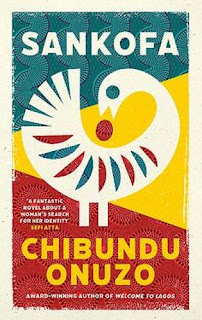
Sankofa by Chibundu Onuzo


Reviewer: Catriona Troth

What We Thought of It:

“You came to meet a man in the past. There is a mythical bird we have here, Anna. We call it Sankofa. It flies forward with its head facing backwards. It’s a poetic image, but it cannot work in real life.”

Clearing out the house after the death of her mother, Anna comes across a notebook written by the father she never knew. Written when he was a young African student on the fringes of radical politics, it reveals a story she was never told – of how her parents met. Yet it ends abruptly, without explanation as to why he left and never came back.

With these clues to go on, she begins to research his name, and discovers to her shock that her father became the first President of Bamana, the country of his birth. And that his legacy is anything but straightforward.

She first tracks down the British academic who wrote his biography and then, with great trepidation, travels to Bamana to confront her father and learn something about her own identity. But Anna finds herself an obroni (foreigner) in Bamana, out of her depth, pulled in different directions, judging the country – and her father – with European eyes.

Initially suspicious, her father – still a powerful and wealthy man – makes her a Bamanan citizen and then takes her to his country home, an estate where he wields enormous power and where they call him Daasebre: “we cannot thank you enough”.

But other members of the family are less than happy at the appearance of this previously unknown eldest daughter from England. And when Anna begins to challenge some of her father’s actions, things get complicated. Is there a way for Anna to find a reconciliation between the two parts of herself?

Sankofa is an exploration of how identity impacts those of African heritage, of the complicated relationship between Europe and Africa and how it affects them, their values and their sense of self. Onuzo, like Anna, challenges both European and African standards and assumptions.

You’ll Enjoy This If You Loved: When We Speak of Nothing by Olumide Poloola; Admiring Silence by Abdulrazak Gurnah; The Private Joys of Nnenna Maloney by Okechukwu Nzelu; Brit(ish) by Afua Hirsch

Avoid If You Dislike: Fictionalised versions of Africa

Perfect Accompaniment: A bottle of ice cold water and a sketchpad and paints

Genre: Contemporary, Literary

Buy This Book Here

Monday, 7 March 2022

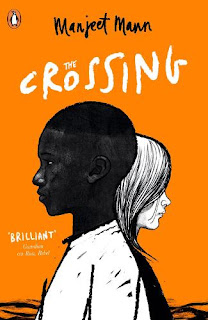
The Crossing by Manjeet Mann


Reviewer:
Catriona Troth

What We Thought of It:

Manjeet Mann’s heartbreakingly beautiful verse novella is a book you will never forget.

Written in a form more familiar in music – where two voices sing (or in this case speak) in counterpoint but not in dialogue – it tells the story of two teenagers, Sammy and Nat.

Nat is a teenager from the south coast of England. She has just lost her mother, and with it so much else. Even her passion for swimming in the sea has turned into a dread of the water.

Half a world away, Sammy is in Eritrea, facing a conscription that is in essence a form of bonded labour with no fixed end point. His only choice is to face a difficult journey out of the country to try and reach the safety he believes he can find in Europe.

We die if we stay, we die if we get caught, we might die in the Sahara, we might die in the sea. But one thing is certain: if we escape – we live.

Written in free verse, the last few words of each section become the first few words of the next, weaving the two voices together as the narrative passes back and forth between them. As Sammy’s journey brings him, step by step, towards the French coast, Nat begins to train to do a cross-channel swim to raise money for refugees. But not everyone in her family supports what she is doing.

I guess migration is only a human right if you’re the right type of human.

In this short and simple text Mann succeeds in illuminating an astonishing range of issues. From Sammy’s story we learn of the often-misunderstood motives that drive young people to flee their homes, the horrors of the journey they undertake, the cruelty of the smugglers who exploit their desperation, and the cold indifference of the bureaucracy that meets them at the edge of freedom. From Nat’s story, we learn of the grinding nature of austerity that leaves some as easy prey to extremists, the trap of white saviourism, and what it takes to be a true ally.

You’ll Enjoy This If You Loved:
Boy, Everywhere by A. M. Dassu; What Strange Paradise by Omar El Akkad; Black Flamingo by Dean Atta,

Avoid If You Dislike: Free verse

Perfect Accompaniment: A walk by the edge of the sea

Genre: Young Adult, Poetry

Buy This Book Here

Thursday, 25 November 2021

What Strange Paradise by Omar El Akkad


 Reviewer: Catriona Troth

What We Thought of It:

Egyptian born Canadian Journalist Omar El Akkad has taken the image of a child’s body washed up on the shores of a Greek island, and from it spun a modern fable.

Winner of this year’s Giller Award, What Strange Paradise is set on a fictionalised version of Crete, where the flora and fauna have been given a mythic quality that edges us away from realism.

The story is split into two interweaving parts.

Before tells the story of how Amir and his family flee their home, first overland to Egypt, then across the Mediterranean on an overcrowded boat, only to meet a storm when in sight of their destination.

Now the men and women who, in undertaking this passage, had shed their belonging and their roots and their safety and their place of purpose and all claim to agency over their own being, had now finally shed their future. There was nothing left of the smuggler’s apprentice to threaten, nothing he could leverage.

In After, Amir’s body is one of dozens thrown upon the shore when the ship breaks apart, but he does not die. He runs for the shelter of the woods above the beach and is found by a young girl, Vänna. She herself is the descendent of immigrants – blond, blue-eyed immigrants who came to open a hotel. Teenaged, restless, unsure of her place in the world, Vänna’s instinct is to help Amir escape from the soldiers who are sent to round up survivors and deliver them to the ex-school turned detention camp.

Neither speaks the other’s language, but slowly they find ways to communicate. As they make their way across the island, pursued by the relentless Colonel Kethros, a modern Inspector Javert determined to let no asylum seeker escape, we learn more of the horrific journey Amir has already survived – and so many others have not.

A powerful laying bare of the human tragedies behind the statistics and rhetoric surrounding asylum seekers. El Akkad’s writing has a deceptive simplicity to it. El Akkad says that he drew inspiration in part from the story of Peter Pan. It reminds me, in its construction, of books such as Hemingway’s The Old Man and the Sea. Its use of rhythm and repetition also echoes of traditions of oral storytelling.

An important, beautiful and heart-rending story.

You’ll Enjoy This If You Loved:
Exit West by Mohsin Hamid

Avoid If You Dislike: Stories of children in danger

Perfect Accompaniment: Salted almonds and chocolate truffles

Genre: Literary, Fable, Contemporary

Wednesday, 1 September 2021

Splinters of Sunshine by Patrice Lawrence


Reviewer:
Catriona Troth

What We Thought of It:

Dandelions close at night and open again in the morning, like they’re holding in the sunshine. Some dandelions have two hundred petals. The most I ever counted was a hundred and eighty. It’s like the sun broke into thousands of pieces so everyone can have some shine.

Splinters of Sunshine is the latest YA novel from the award-winning author Patrice Lawrence. Having won the inaugural Jhalak Prize for Children and Young Adults for her novel Eight Pieces of Silva, which dealt with exploitative relationships, Splinters of Sunshine takes on the highly pertinent issue of County Lines drug gangs.

County Lines refers to the practice of grooming vulnerable young people to move drugs from one area (and one police authority) to another in order to avoid detection. The young people involved are often, but not exclusively, in care.

A*student, Spey, used to have a best friend called Dee. She lived with her grandmother and she was obsessed with wildflowers – their names, their colours, the stories behind them. Once, on her sixth birthday, the two of them created a huge collage of flower pictures, and at the end of the day they cut it in two and took one half each. But then Dee’s Nan died, Spey and his mother moved away, and they lost touch.

Spey saw her once or twice after that – just enough to have an uneasy feeling she might be in trouble. But he did nothing (what could he do?). But then, one day, just after Christmas, he receives an envelope, forwarded from his old address, with Dee’s half of the collage in it. And he knows he has to do something to find her.

Spey’s father, who he barely knows, is just out of prison. Spey doesn’t really want anything to do with him. But maybe, just maybe, he is the one person who can help.

This is a heart-breaking story of the exploitation of young people. But it is also a story of courage and resilience and friendship. As with all of Patrice Lawrence’s novels, she tackles contemporary issues with compassion and sensitivity. It’s a book to start a conversation on difficult issues – but that never gets in the way of a great, page-turning story.

Spey and Dee are characters that will creep into your heart and stay there forever.

Beautifully illustrated, too, with line drawings of Dee’s favourite flowers, with their scientific and common names – names which are steeped in folk history. (The cover and illustrations are designed by Michelle Brackenborough at Hachette Kids.)

At the end of the book, resources can be found to support care-leavers, children of prisoners, and those affected by gangs and county lines.


You’ll Enjoy This If You Loved: Eight Pieces of Silva by Patrice Lawrence; And the Stars Were Burning Brightly by Danielle Jawando; Boy, Everywhere by A. M. Dassu; Wonderland by Juno Dawson

Avoid If You Dislike: Confronting issues around drug culture

Perfect Accompaniment:
A quiet hour in a wildflower meadow

Genre: Contemporary, Young Adult

Buy This Book Here:

Thursday, 8 July 2021

The Other Black Girl by Zakiya Dalila Harris


Reviewer:
Catriona Troth

What We Thought Of It:


From the opening pages, The Other Black Girl presents as a modern-day office comedy – a Black woman’s Working Girl, or The Devil Wears Prada. But all is not quite what it appears.

Yes, this is a take-down of the Whiteness of the publishing industry – an expose of the blunders and gaffes of its narrow demographic of gatekeepers. But there is a surreal element to it too. And that surreal element takes satirical aim at those who choose compliance and adjacency to power over solidarity and the fight for equality.

When Nella first sees that another Black woman has been hired by her exclusive (and very White) publishing house, she is delighted. But almost at once, something starts to feel off. She can’t put her finger on it, but just why is Hazel able to worm her way into everyone’s good graces so quickly? And who is sending Nella anonymous notes? Is she just jealous? Or paranoid? Or is something really wrong here?

And just what is in that special hair grease Hazel is so keen to share?

The Other Black Girl is playful and at times downright hilarious – but much of the fabric of the story is based on Harris’s own experiences in the publishing industry. It’s not difficult to draw parallels between the book launch at the centre of the story and one or two recent high-profile launches where embarrassing gaffes have been blamed on the lack of having any non-cis/het/white/middle-class staff senior enough to speak up. The absence of what Nella terms “For Us, by Us: the Effect of Black Eyes on Black Ideas.”

A clever and sharp-toothed debut with a sting in its tail. And I love the symbolism of the cover - the broken teeth of the black Afro comb, stark against the rich yellow background.

You’ll Enjoy This If You Loved: Queenie by Candice Carty-Williams; The Yield by Tara June Winch; The Hundred Year Old Man Who Jumped Out of the Window and Disappeared by Jonas Jonassen;

Avoid If You Dislike: Wondering off the path of realism

Perfect Accompaniment: A luxury hair treatment

Genre: Comedy, satire, contemporary.

Buy This Book Here

Tuesday, 22 June 2021

Transcendent Kingdom by Yaa Gyasi


Reviewer:
Catriona Troth

 What We Thought of It:

Transcendent Kingdom is the second novel by Ghanaian-American author Yaa Gyasi.

As a child, Gifty searched for answers in the absolutism of her evangelical faith. Yet “when I lost my brother […] God was gone in an instant.”

Now she struggles to balance three things – the evangelical faith she has rejected but cannot wholly let go. Her family’s struggles with addiction and depression. And the neuroscience research she has immersed herself in to try and make sense of it all.

“I had traded the Pentecostalism of my childhood for this new religion, this new quest, knowing I would never fully know.”

Her brother, a brilliant athlete, died of a heroin addiction that began when he was prescribed opiates for a sports injury. Her mother has since suffered cycles of depression that leave her unable to get out of bed. As Gifty sees it, in both cases, there are issues with reward seeking: in depression, there is too much restraint in seeking pleasure; drug addiction, there is not enough.

The mice she experiments on are addicted to the energy drink, Ensure. They will endure repeated electric shocks in the desperate home of getting another dose. Gifty is looking for ways to turn that reward seeking behaviour. At the back of her mind, there is always the question:

“Could it get a brother to set down a needle? Could it get a mother out of bed?”

Gifty’s family emigrated from Ghana to America when she was a small child. The racism they have since experienced undoubtedly plays a part in the scars the family all carry. Their father, who is eventually driven back to Ghana by homesickness, learns early on, “how America changed around big black men.” How he had to “try to shrink to size, his long, proud back hunched as he walked with my mother through Walmart, where he was accused to stealing three times in four months.” Nana endures racist abuse from the parents of other team members when he is playing sport. And Gifty overhears members of her church, which has been her sanctuary, remark how “their kind does seem to have a taste for drugs.”

But this is not primarily a story of the harm caused by racism – personal or institutional. It is about a quest to understand what makes us human. What gives us the spark of life and what causes us, sometimes, to throw that gift away. As we follow Gifty along both paths, Gyasi seems to say that science and religion both have insights to offer – and both have limitations.

As she explains in her Acknowledgements, Gyasi has drawn on the research work of a close friend to provide the details of Gifty’s research. The depth of her understanding allows the science behind Gifty’s research to be woven into the fabric of the story – not simply overlaid on it. The clinical detail plays against the lyrical prose, just as, in the themes of the book, science plays against religion, and Amereica’s culture and tradition plays against Ghana’s. Gyasi holds the tension between them to the end, not allowing either one nor the other to win.

Shortlisted for the 2021 Women’s Prize for Fiction

You’ll Enjoy This If You Loved: Technologies of the Self by Haris A Durrani, We Are All Completely Beside Ourselves by Karen Joy Fowler, Fragile Monsters by Catherine Menon

Avoid If You Dislike: Descriptions of experiments on animals.

Perfect Accompaniment: Chin chin (Ghanaian fried spiced pastry crisps)

Genre: Contemporary, Literary

Buy This Book Here:

Thursday, 3 June 2021

The Yield by Tara June Winch


Reviewer:
Catriona Troth

What We thought of It:

After a long absence, August is returning to her home in Massacre Plains, a remote part of central Australia, to attend the funeral of her grandfather, Poppy Albert. But when she gets there, she finds that even her families last fragile hold on what used to be their ancestral land is threatened by the development of a tin mine.

The Yield weaves together three narratives. There is August’s story, of reconnecting with her family, of coming to terms with the loss of Poppy Albert, and of her growing conviction that they could fight the incursion of the mine.

The second is an extended letter, written by the white pastor who set up the original mission on Massacre Plains to protect the local Aboriginal people. His letter both documents the extent and brutality of the atrocities committed by white settlers and reveals the some of the damage caused through his own good intentions.

Finally, there are Poppy Albert’s own writings – his attempt to create a dictionary of his people’s original language. Each word that he captures has a story to go with it – and those stories tell something of the traditions of the original inhabitants of Massacre Plains, of their custodianship of the land and of the environmental degradation brought about through ignoring that deep knowledge.  But fragment by fragment they also reveal the devastating truth behind the family tragedy that led to August leaving Massacre Plains.

Poppy’s dictionary underlines the importance of reclaiming language, because a language reveals a whole different way of thinking. As Poppy says, it sings mountains into existence.

Like this year’s Jhalak Prize winner The First Woman, The Yield explores the intergenerational impact of colonialism – but this time through the lens of an Indigenous people who were all but wiped out by white settlers in the course of their insatiable land grab. It also reflects on how ignorance and the wilful rejection of traditional knowledge and practice has led to the destruction of a delicate ecological balance.

Achingly beautiful. A devastating tally of the cost paid by the relentless drive to expand European ‘civilisation,’ yet containing within it a small flame of hope that some of what has been lost can still reclaimed.

You’ll Enjoy This If You Loved: The First Woman by Jennifer Nansubuga Makumbi, The Break by Katherena Vermette

Avoid If You Dislike: Confronting the devastating impact of colonialism on a land and its people.

Perfect Accompaniment: Freshwater fish, grilled and flavoured with herbs.

Genre: Historical Fiction, Contemporary, Indigenous Writing, Literary Fiction

Buy This Book Here

Friday, 12 February 2021

Mayflies by Andrew O'Hagan


Reviewer:
David C. Dawson

What we thought of it:


Only occasionally does a book come along whose every page contains at least one quotable phrase, at least one pithily worded exposition of the human condition that makes you stop and think.

Mayflies
is such a book.

On the surface it's a story about what happens to two friends from a small, nondescript Scottish town. The book starts in their optimistic late teens when they are carefree, daring, and rebellious. Then it jumps forward thirty years to when they are jaded in middle age.

But Mayflies is about far more than that. Woven lightly into this witty story of friendship are significant issues that may at some point affect all of us.

James, the narrator, is eighteen and his best mate Tully Dawson is twenty. They live in Scotland -  “Irvine New Town, east of eternity.”

Tully “had innate charisma, a brilliant record collection, complete fearlessness in political argument, and he knew how to love you more than anybody else.” James is in awe of him.

The first half of the book follows a reckless weekend in Manchester, when the two young men go to the G-Mex for a music festival headlined by The Smiths. Over the weekend they meet up with their friends and reveal dreams, ambitions and their rejection of practically every aspect of conventional life. 

“What we had that day was our story. We didn't have the other bit, the future, and we had no way of knowing what that would be like. Perhaps it would change our memory of all this, or perhaps it would draw from it, nobody knew." 

Thirty years later some of them are married, some of them are divorced. And Tully is about to reveal a major twist in the story. It puts James in an ethical quandary. Its resolution left me thinking for a long time after I’d finished the book.

O’Hagan’s story is genuinely unpredictable. He writes deceptively simple prose, which gives deep insights into our relationships with each other on every page. One of the best books I’ve read in a long time.

You’ll enjoy this if you like: Trainspotting by Irvine Walsh

Avoid if you don’t like: References to euthanasia

Ideal accompaniments: An indie soundtrack from the 1980s and a pint of Black & Tan

Genre: Contemporary

Wednesday, 13 January 2021

The Family Tree by Sairish Hussain


Reviewer:
Catriona Troth

What We Thought Of It:

Spanning almost thirty years, The Family Tree is a portrait of a family riven by a mother’s death in childbirth, by the pressures on Muslim family life of 9/11 and its aftermath, but most of all by a vicious assault that leaves a close friend lying in a coma.

It begins with the father, Amjad, newly bereaved and struggling to cope, trying to comfort his frantically wailing baby girl and his lost and heart-sore son. The profound tenderness in that opening scene will be tested to breaking point in the years that follow, but that little family of three will remain at the core of the story.

It’s a story of love within a family, how it can fracture and what is needed to repair it. And of how, following trauma, friendships can shatter and reform along lines that were previously unimaginable. It encompasses both private grief and public tragedy, and examines what can happen when those two things collide and exert unendurable pressure on a young person on the threshold of life.

Through the story runs image of the shawl that belonged to Neelam, the mother who died giving birth to her daughter. It’s a teal blue pashmina with the mustard-coloured blossom tree stretching along its full length, with birds that flit from branch to branch. In Amjad’s mind, the tree becomes their family tree, and when the children are little, he teaches them to identify the birds with each member of the family. It becomes the golden thread through which the family can find itself again.

This is a novel wide in scope and straightforward in its narrative style. An impressive debut.

Shortlisted for the 2020 Costa First Novel Award.


You’ll Enjoy This If You Loved:
Dear Infidel by Tamim Sadikali

Avoid If You Dislike: Stories involving homelessness, drug addiction and serious assault

Perfect Accompaniment:
Home-made roti

Genre: Contemporary 

Thursday, 10 December 2020

Love after Love by Ingrid Persaud


Reviewer:
Catriona Troth

What We Thought of It

Set in more-or-less present-day Trinidad, with its complex mixture of races and religions - and in particular among the largely Christianised descendants of Indian bonded labourers brought to the island when it was a British colony - Love After Love follows the lives of Miss Betty, her young son Solo, and her gay lodger, Mr Chetan.

Reading it feels like being privileged to dip at intervals into personal diaries of the three protagonists. Their Trini voices ring out strong and true and full of humour.

“If you bounce up your ex after all this time I find God should arrange it to be in a crowded supermarket on a Saturday morning. He and the wife should be vex with one another and the child throwing a tantrum on the floor.”

The narrative is layered and richly textured. Every time you think you know which way the story is going, it gives itself a little twist and flies off in a new direction – but one that, once you’ve found your feet again, feels completely right and true. 

Persaud captures the paradoxes of Trinidad, the beauty side by side with violence.

“We followed the coast road, taking in the beauty of mile after mile of beach lined with coconut trees. If this country didn’t have five hundred plus murders last year alone we would be in paradise.”

She examines the special nature of the relationship between a single mother and her only son – and what happens when that breaks down. And she picks apart toxic attitudes that encourage, or at least turn a blind eye to, homophobia, domestic violence and alcoholism. 

This is a novel that will make you laugh and cry and catch your breath in your throat. So assured are the voices that it is hard to believe that this is Persaud’s debut novel. Mind you, the author has already won the Commonwealth Short Story Prize in 2017 and the BBC National Short Story Award in 2018, so perhaps it should be no surprise that Love After Love is on the shortlist for the 2021 Costa First Novel Award.

An explosively strong debut novel and a welcome addition to the pantheon of fabulous Trinidadian writers like Michelle Innis (She Never Called Me Mother) and Claire Adam (The Golden Child)

Shortlisted for the Author's Club Best First Novel Award 2021

You’ll Enjoy This If You Loved: The Golden Child by Claire Adam, The Cupboard Full of Coats by Yvvette Edwards

Avoid If You Dislike: Novels writing in dialect

Perfect Accompaniment: Curried cascadoux (Trinidadian fish)

Genre: Contemporary, Caribbean literature, LGBT

Buy This Book Here

Friday, 13 November 2020

The Friend by Sigrid Nunez


Reviewer:
David C Dawson

What we thought of it:

A friend bought me this book recently. My friend is a dog lover. I have two cats. The book is about a woman writer living in New York who is forced to take in an ageing Great Dane when its owner, her lifelong friend, kills himself.

My mother had recently died when my friend gave me the book.

It was the perfect choice of reading material. It’s only 200 pages long and I read it in one sitting as I remained confined to the house during lockdown, indulging my grief.

Nunez has captured the deep and dark emotions of grief in a way that no other writer has ever done for me. At one point she writes:

“Walking in Midtown, rush hour’s peak, people streaming in both directions, I find myself seething, ready to kill. Who are all these fucking people, and how is it fair, how is it even possible that all of them, these perfectly ordinary people should be alive?”

It was as though she had read my innermost thoughts about my mother’s death as I grumpily walked around the supermarket and put those thoughts on the page for me.

That’s not to say this is a sombre book. I have never owned a dog, but I can only conclude that Nunez has done. Her description of the central character’s developing relationship with a lumbering giant of an animal called Apollo, with its bad breath, flatulence and clumsiness through arthritis created a vivid image in my mind’s eye that stayed with me long after I’d closed the book. There is humour, pathos, anger, frustration, and so much love, inside this slim volume.

Nunez reflects on the nature of human relationships with a poignancy and accuracy I have rarely encountered in literature. It’s no wonder that The Friend won the 2018 National Book Award for Fiction in the US, and was shortlisted for the Dublin International Literary Award.

Highly recommended.

You’ll enjoy this if you like: My Dog Tulip by J R Ackerley

Avoid if you don’t like: suicide references

Ideal accompaniments: A four-legged friend

Genre: Divorce fiction, animal fiction

Thursday, 29 October 2020

Boy, Everywhere by A. M. Dassu


Reviewer:
Catriona Troth

What We Thought Of It

Onjali Rauf’s wonderful The Boy at the Back of the Class has done an incredible job of raising awareness among younger children of what it means to be a refugee. But if there was one small criticism that arguably could be levelled at it, it was that it centred the British children in the class and not the refugee child himself.

A. M. Dassu’s Boy, Everywhere, aimed at slightly older children, makes Sami, the Syrian child forced to flee his country because of civil war, the very heart and centre of the story.

Sami’s life in the opening pages of the book could be the life of a middle-class child anywhere in Europe or North America. He plays on his Xbox and worries about having the latest football boots. His biggest worries are boring school lessons and defending his best mate from the class bully.

The war has been going on in the rest of Syria for a while now, but life in Damascus hasn't changed much. Sami never imagines the war will really affect him. But then one day a bomb goes off that destroys a big shopping mall, narrowly avoiding killing Sami’s mother and leaving his five-year-old sister traumatised. Sami’s parents realise they have no choice but to leave Syria and to try and reach a safe country.

Boy, Everywhere is the story of Sami’s perilous journey from Syria to the UK and what happens to him and his family once they arrive Manchester. It’s a tough story, based on first-person accounts from other young people who have made the journey.

At every turn it demolishes myths about asylum seekers. It shows what it means to put your lives in the hands of smugglers, to survive terrifying boat crossings, to arrive in the UK only to be locked up in a detention centre with other desperate people – and then when you finally begin to make a life for yourself in your new country, to face bigotry and rejection.

Sami is angry and frustrated as any teenager would be at being torn from his home and his friends. But he is terrified and guilty and confused. To read his story is to want to shelter and protect him. And there are so many Samis out there.

A heart-rending story that will open your eyes to the reality of what refugees face on their journeys here and when they arrive – and why they are fleeing their countries in the first place.

You’ll Enjoy This If You Loved: The Boy at the Back of the Class by Onjali Rauf.

Avoid If You Dislike: Graphic accounts of the dangers faced by refugee families

Perfect Accompaniment: Maqluba (“upside down”) a Syrian dish of meat, rice and vegetables

Genre: Older children and Young Teens; Contemporary 

Thursday, 1 October 2020

Love in Colour by Bolu Babalola


Reviewer: Catriona Troth

What We Thought Of It:

What a joy this book was to read!

Bolu Babalola has taken raw material from folk tales and mythology around the world and spun from it a paeon to romantic love, in all its manifestations.

The mundane mystique of romantic love that is ubiquitous at a glance, but, when you look closer, you notice the tessellations of understanding, patience, friendship and attractions. She sees both the miracle of the spark lighting and also the working, because it takes work, and for the work to work, you have to respect each other, like each other.

In this collection of tales, figures familiar to those with a classic western education (Psyche, Scheherzade, Nefertiti, Thisbe) recount their stories alongside a pantheon of characters from Nigeria, Ghana, Lesotho, China, Korea.

Some have been transported into the modern world – others remain in a version of their original setting. Thus Osun, a Nigerian river deity, becomes a sports star at an elite school. Psyche works in the cut-throat world of the fashion magazine. Nefertiti operates in the criminal underworld of a contemporary-feeling dystopia

As Babalola says in her Author’s Note, many of the original tales were “rife with misogyny and violence and were created within heavily patriarchal contexts.” She has transformed them, placing the women at the centre of their stories; giving them agency, power, discernment.

Here are childhood sweethearts and first date flirtations. Partnerships built up over many years and alliances forged in a red-hot minute. Some of the stories and sexy and others tender, some crackle with wit and some are heartbreaking.

Bablola’s dialogue is wonderful. I would love to see these done as a series of television shorts (directed by Michaela Coel perhaps?). They would surely fizz out of the screen as they fizz off the page.

The last few stories are not grounded in mythology but are Babalola originals, and the last of all, reading between the lines, is a tribute to the author’s parents. If so, no wonder they raised a daughter with such sensitivity to this most transformative of emotions.

You’ll Enjoy This If You Loved: Love Across a Broken Map by The Whole Kahani, The Nearness of You by Sareeta Domingo

Avoid This If You Dislike: Happy endings; Celebrating love without a shred of cynicism

Perfect Accompaniment: A glass of rosé

Genre:
Romance, Mythology, Short Stories, Contemporary

Buy This Book Here

Thursday, 30 July 2020

Rainbow Milk by Paul Mendez

Reviewer: Catriona Troth

What We Thought Of It:


Paul Mendez’s powerful debut Rainbow Milk is fiction, but it draws closely on Mendez’s own life. Indeed, the book began as a life writing exercise before he was persuaded to turn it into fiction.

Jesse has been brought up by his black mother and white stepfather in a strict Jehovah’s Witness community in Swan Village in the West Midlands. Outwardly, he is the perfect Brother, “the darling boy of the congregation, baptised, about to become a ministerial servant, halfway to elderdom, at nineteen.” Inwardly, he is struggling with his sexuality and with his mother’s emotional rejection.

When he is abruptly dis-fellowshipped and consequently ostracised by his family and the Witness community, Jesse escapes to London to lose himself in a mixture of drugs, sex work and the occasional bout of waitering.

Most of Jesse’s clients use him or abuse him, and immediately forget him, but others, like Derrick “rescued him by giving him the space to feel like a normal human being.” And then there is Owen, his newly-divorced gay flatmate, with whom he shares what could have been a bleak and lonely Christmas Day.

The novel is rich in musical references. Many of the scene are scored with music from Joy Division, Mary J Blige, Massive Attack, Public Image Limited...

“He closed his eyes and allowed the music to print images on the back of his eyelids. Derelict foundries; shopping trolleys in the algae covered canals, the gas tank; the disused railways lines choked with stinging nettles, a dustbin for screwed-up, spunked-in porn...”


Mendez’s descriptions of sex work can be brutal and shocking. But he is equally good at conveying moments of profound tenderness. He is adept too at conveying the intensity of a crowded restaurant service – the demands of the customers, the petty jealousies of the staff, the things that go wrong and the fleeting connections.

Rainbow Milk opens, though, with a young West Indian couple arriving in England’s industrial Black Country in the 1950s. It shows the poverty and prejudice they faces, but also the tenderness of a father to his young children and his tentative but growing relationship with his white neighbour. For most of the book, this section appears to stand alone, before it’s woven back into Jesse’s story towards the end.

Until recently, the lives of Black gay men have often been all-but invisible With films like Moonlight, television programmes like I May Destroy You and books like Dean Atta's The Black Flamingo, that is starting to change. Rainbow Milk is a deeply moving addition. It's the story of an exceptional journey – out of one world and into another, and from rejection and intolerance to acceptance and love. Parts of it are hard to read but it is ultimately brimming of hope and vibrant with life.

Shortlisted for the Jhalak Prize 2021

Listen to Paul Mendez talking to Okechukwe Nzelu, author of The Private Joys of Nnenna Maloney, on the Cabin Fever podcast, as they discuss writing, their different backgrounds and their experiences as Black gay men in Britain.

You’ll Enjoy This If You Loved: Jonny Appleseed by Joshua Whitehead

Avoid If You Dislike: Graphic depictions of sexual activity.

Perfect Accompaniment: ‘Disorder’ by Joy Division

Genre: Contemporary, LGBTQIA+

Buy This Book Here:

Thursday, 2 July 2020

The Private Joys of Nnenna Maloney by Okechukwu Nzelu

Reviewer: Catriona Troth

What We Thought of It:

Nnenna is the only child of single mother and Cambridge Classics graduate Joanie and a Nigerian father she has never met. She and her mother are close, but Nnenna has never been able to get her mother to talk about her father. So when she begins to explore her Igbo heritage, she does so in secrecy.

The book captures the intensity of the relationship between a single mother and her only daughter, and the peculiar pain (for both of them) of the daughter’s first adolescent rebellion. It examines what it means to grow up without knowing about a significant part of your heritage, and how a white parent, however well-intentioned, can be blind to the impact that has on their child.

The story is peppered with examples of the sort of everyday sexism and racism women of colour face every day. (“I’m not normally attracted to girls like you but...”) You can see how these begin to chip away at Nnenna’s sense of self, as she imagines the conversations her teachers might be having about her behind her back.

This book was not quite what I was expecting when I first opened it, and as when you step onto something that is moving in a way you don’t expect, it can take a little while to get used to the direction of travel. The tone early on reminded me of books like Frederic Raphael’s Glittering Prizes, which looked at the lives of Cambridge graduates in the 1950s to 70s. And though Nnenna is central to the story, the narrative is divided between her, her parents and their group of Cambridge friends in the 1990s, and in the present day, her mother, one of those friends (a gay West Indian man) and a couple of Nnenna’s friends. Through those additional characters, the book also explores generational, class and cultural attitudes to gay men, and shines a light on exploitation within the gay community too.

There is an interesting comparison to be made between this and Olumide Popoola’s When We Speak of Nothing, which shares some of the same themes. Nnenna’s world, among largely well-off pupils at a high-achieving school in Manchester, is a long way from Abu and Karl’s London comprehensive. But teenage dilemmas remain much the same, regardless of background.

A witty, troubling tale of coming of age as a mixed-race child of a single, white mother.

The Private Joys of Nnenna Maloney was shortlisted for the 2020 Desmond Elliott Prize.

You’ll Enjoy This If You Loved: Olumide Popoola’s When We Speak of Nothing

Avoid If You Dislike: Narratives shared among a large number of characters

Perfect Accompaniment: Groundrice and fried plantain

Genre: Contemporary, Coming of Age, LGBTQ

Buy This Book Here

Thursday, 25 June 2020

The Girl with the Louding Voice by Abi Daré

Reviewer: Catriona Troth

What We Thought of It

In the Prologue to her debut novel, The Girl with the Louding Voice, Abi Daré quotes from the Nigerian Book of Facts, 2014:

“Nigeria is the richest country in Africa. Sadly, over 100 million Nigerians live in poverty.”

That dichotomy is at the heart of this book.

Adunni is born into a poor family in a small village in Nigeria. She wants more than anything else to get an education

“That day, I tell myself that even if I am not getting anything in this life, I will go to school I will finish my primary and secondary and university schooling and go to university, because I don’t just want to have any kind of voice...I want a louding voice.”

When her mother dies, that hoped is snatched away. She is married off, aged 14, to a much older man who already has two wives. Yet, on her path from there, via her time as a house girl / domestic slave to a fabulously wealthy Lagos businesswoman, to her ultimate destination, she never loses sight of her passion for learning – and for teaching other Nigerian girls.

Like Celie in Alice Walker’s The Color Purple, Adunni tells her story in non-standard English – which doesn’t stop her from expressing herself with passion and clarity. Here, she rages against the assumption that she exists just to breed more children.

“Why fill up the world with sad childrens that are not having a chance to go to school? Why make the world to be one big sad, silent place because all the childrens are not having a voice?”

Adunni uses every scrap of learning she can to fuel a burning desire for justice – for herself and for others, like Khadija, her husband’s second wife who have suffered even more. Her curiosity and sense of justice also drive her to find out what happened to Rebecca, her employer’s previous house girl, whom no one seems to want to talk about.

“The Slavery Abolition Act was signed in the year 1822,” I say. [...] “People are still breaking the Act. I want to do something to make it stop [...] to stop slave-trading of the mind, not just of the body.”

Adunni’s story is at times desperately sad, but it is also a glorious celebration of the emancipating effect of female education. Adunni’s louding voice needs to be heard.

The Girl with the Louding Voice won the 2018 Bath Novel Award and is shortlisted for the 2020 Desmond Elliott Prize.

You’ll Enjoy This If You Loved: When Trouble Sleeps by Leye Adenle; The Color Purple by Alice Walker; Djinn Patrol on the Purple Line by Deepa Anappara;

Avoid If You Dislike: Books written largely in non-standard English

Perfect Accompaniment: Spiced meat pie

Genre: Contemporary, Literary

Thursday, 11 June 2020

You People by Nikita Lalwani

Reviewer: Catriona Troth

What We Thought:

Nikita Lalwani's You People takes place in London, among the marginalised and dispossessed, asylum seekers and “Illegal” immigrants, those with no right to work and no resource to public funds, scrabbling to scratch a living while trying to make the case to be allowed to remain in the UK. It focuses in particular on those still fleeing torture in Sri Lanka.

Freedom from Torture has documented ongoing cases of torture by state officials in Sri Lanka. But survivors continue to find it difficult to prove their cases and to be given refugee status by the UK Home Office. While they try to make their case, they are not allowed to work or to study and they have to live on asylum seeker support allowance of just £35 per week.

You People tells to story of some of those who have fallen through the cracks, or are still struggling to get documented status. One of the two main point-of-view characters is Shan, who has fled Sri Lanka after the murder of his father, leaving behind his wife and child. He, along with several others like him, are working in a restaurant owned by Tuli, fellow Sri Lankan and benefactor who operates in the grey areas of the law.

The other point of view character is Nia, half Welsh, half Indian, white-passing, but with her own troubled past, who works at the restaurant as a waitress. Nia is torn between wanting to help, and horror both at the cool way Tuli ignores the law when it suits him and the god-like way he appears choose who to help.

Nia acts as our eyes and ears, critiquing Tuli’s actions while at the same time being brought face to face with the very real desperation that necessitates them.

Shan on the other hand is fighting for his existence, knowing that to be sent back to Sri Lanka is very likely a death sentence for him, yet torn apart with guilt for the wife and child he abandoned and now cannot contact.

This is a hugely relevant, contemporary story, born out of the UK’s so-called Hostile Environment for those it deems illegal immigrants. It’s a story that reveals the human consequences of those policies, while subtly testing the reader with moral choices. Who do we choose to help? To whom do we give the benefit of the doubt – and why?

You’ll Enjoy This If You Loved: Happiness by Aminatta Forna, The Year of the Runaways by Sunjeev Sahota, Hostile Environment by Maya Goodfellow, Gifted by Nikita Lalwani

Avoid If You Dislike: Stories of people living under the radar

Perfect Accompaniment: Chilli and garlic prawns, and a glass of wine

Genre: Contemporary Ficton , Literary Fiction

Buy This Book Here

Thursday, 16 April 2020

Darkness Comes by John Lynch


Reviewer: Liza Perrat, author of the French Historical, The Bone Angel trilogy (Spirit of Lost Angels, Wolfsangel, Blood Rose Angel) and Australian 1970s series: The Silent Kookaburra and The Swooping Magpie.

What we thought: I don’t think I’m smart enough to understand everything about John Lynch’s clever novel, Darkness Comes.  

But, at the end of the day, I found this a highly entertaining read and thoroughly enjoyed this judgement-day-style trial of Ted Bailey’s life.

Ted is about as flawed a person as you could get –– womanizer, drug dealer, arms seller, murderer. Hardly a likeable character. But somehow the author evokes in us, sympathy for him. Perhaps we can all see some of ourselves in Ted? 

In the end, I found myself fighting in Ted’s corner as –– now on the verge of death –– each part of his life is exposed, and judged. I found myself wanting him to win, whatever that means. Judged worthy of Heaven, or sent to Hell? Or perhaps neither, if they don’t exist?

The vast cast of characters –– people who have featured in Ted Bailey’s life –– is not, as I first imagined, difficult to follow, as each one is transient (like most of the people we meet in life), making an almost ethereal appearance, and I just enjoyed each fleeting moment with the different characters. Which, so “they” say, we should do in real life. 

I felt the author was drawing parallels with all of us, through each character; that they represented a type of living individual to whom we can all relate.

I did wonder if Ted Bailey represented our human conscience. However that’s something for each reader to decide for him/herself.

Apart from being an extremely well-written novel, with its quirky storyline, very real, and flawed, characters, and easy-to-read, lyrical prose, I would highly recommend Darkness Comes as an entertaining, ingenious look at life and its many nuances.

You’ll like this if you: flawed characters and out-of-the-ordinary tales.

Avoid if you don’t like: political and religious content.

Genre: Contemporary Fiction.

Buy this book here