Showing posts with label In Translation. Show all posts

Thursday, 9 December 2021

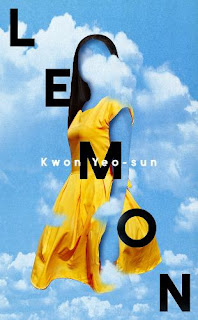
Lemon by Kwon Yeo-Sun; Translated by Janet Hong


Reviewer:
Catriona Troth

What We Thought of It:


“For over sixteen years, I’ve pondered, prodded, and worked every detail embroiled in the case known as ‘The High School Beauty Murder.’”


Lemon is a highly unusual psychological thriller, by Korean author Kwon Yeo-Sun.

Told from the perspective of three former schoolmates, it recounts the events around the brutal and unsolved murder of a fourth – a breathtakingly beautiful young woman called Kim Hae-on.

The three are Kim Hae-on’s younger sister, still obsessed with uncovering the truth of what happened; the troubled girlfriend of the one of the two chief suspects, and a third, who was in the same class as Kim Hae-on. Between the three of them we see partial, overlapping accounts of what happened, then and in the years that followed.

The mesmeric quality of Hae-on’s beauty is such that, even in life, she appears doll-like, perhaps even to herself. She seems only to exist in terms of the – often unhealthy - effect her beauty has on other people.

The colour yellow is a recurring note in the book - the yellow dress worn by the victim the day she died, and then later by her young sister; the yellow of the eggs yolks. The imagined revenge of a yellow angel...   

As the narrative proceeds, each new piece of the puzzle obscures as much as it reveals. It’s as if we are glimpsing things in fragments of a broken mirror. Even at the end of the book nothing is settled, nothing is sure – and as readers, we are left to piece together events and decide for ourselves whether or not we have understood who the real murderer is.

This is a slim novel – you could read it in a couple of sittings. But while each character may be sparing in terms of what they reveal in facts, they expose themselves, in what they say and in what they choose not to disclose.

Intriguing, illusive. Not quite like anything else I’ve read – so often one of the chief pleasures of reading books in translation.

You’ll Enjoy This If You Loved: What’s Left of Me is Yours by Stephanie Scott; Ponti by Sharlene Teo

Avoid If You Dislike: Unresolved endings.

Perfect Accompaniment: 'Han o Baek Nyeon,' song by Aeran Oh

Genre: Psychological Thriller, In Translation


Buy This Book Here:


Monday, 28 June 2021

At Night All Blood Is Black by David Diop, trans Anna Moschovakis


Reviewer:
Catriona Troth

What We Thought Of It:

“Temporary madness in war is bravery’s sister.”

At Night All Blood Is Black is the English-language title of Frère d'âme (lit, “the brother of my soul”), a novel by the French author of Senegalese extraction, David Diop. With his English translator Anna Moschovakis, Diop won the 2021 International Booker Prize for this – the first French-language novelist to do so.

Set in the trenches of the First World War, the novel reveals the terrible damage war can wreck on the human mind – as well as reminding us that soldiers from colonised Africa (“chocolats” in the French slang of the time) were fighting and dying alongside white soldiers (“toubabs”).

Alfa Ndiaye has witnessed the death of his childhood friend, “my more-than brother”, Mandemba Diop. Mandemba died in agony, his guts spilling out over no-man’s land, but Alfa could not bring himself to do as his friend begged him and slit his throat to put him out of his agony. His guilt at his failure to do so turns him into a kind of avenging spirit, haunting the battlefields and inflicting on the German soldiers “the blue-eyed enemy from the other side” what they inflicted on Mandemba.

Diop uses patterns and tropes of African storytelling in the structure of the novel – patterns that are also reminiscent of Old English sagas like Beowolf. Certain phrases repeat over and over again like the beat of a drum. (God’s truth … my more than brother … I, Alfa Ndiaye, son of the old man…) And Alfa’s feats, at first legendary, slowly turn him from hero in the eyes of his fellow soldiers, into a madman or perhaps a sorcerer.

Alfa’s memories of growing up in Senegal with Mandemba also touch on the impact of colonialism on Africa, as village elders are pressured to turn from subsistence farming to cash crops, leaving them dependent on outside buyers into order to feed their families.

Diop, and his translator, use extraordinarily beautiful language to paint a picture of the extreme ugliness of war. Alfa believes he betrayed his friend, but in truth, he, like the soldiers around him, have been betrayed by those who led them into war and who use them as human sacrifices in the interminable futility of trench warfare.

There have been so many novels set in those First World War trenches, that to write something new and unique is an extraordinary achievement. Diop may very well have done just that.

You Will Enjoy This If You Loved: The Shadow King by Maaza Mengiste, The Song of Achilles by Madeline Miller, The Regeneration Trilogy by Pat Barker

Avoid If You Dislike:
Graphic descriptions of war and war wounds

Perfect Accompaniment: A glass of mint tea

Genre: Literary Fiction, Historical Fiction, In Translation

Buy This Book Here

Thursday, 3 September 2020

The Enlightenment of the Greengage Tree by Shokoofeh Azar (trans. Anon)


Reviewer:
Catriona Troth

What We Thought of It:


Sometimes the only way to convey the true nature of horror is via the surreal.

Shokoofeh Azar’s novel, The Enlightenment of the Greengage Tree is the account of a family broken apart and eventually destroyed by Iran’s Islamic Revolution. 

It opens on the day the son is executed by the regime. That same hour, the mother climbs a greengage tree in search of enlightenment, while her husband and daughters gather beneath the tree to watch over her.

What slowly becomes apparent is that the younger of the two daughters is also dead – burnt alive in a fire in the family home during the last days of the revolution. The family have escaped Tehran to a remote village in the north of the country, hoping to find peace, but the revolution follows them. Her ghost, watching over them, continues to tell their story.

While the events of the revolution and the repressions that follow it are there, the story continually spins off into fantastical events and encounters with extraordinary characters, drawn in a large part from the rich heritage of Persian mythology. There are jinns and soothsayers, a black snow that lasts one hundred and seventy-seven days, a man that can hear the opening of a flower and a woman who transforms into a mermaid ... The language in these magical passages is lyrical.

"It seemed as though the orphaned mothers had become … the luminous blue butterflies the flitted ahead of the men the whole way – as if trying to distract them from their search with the blue-gold dust they sprinkled on the searchers’ heads and shoulders." 

Azar has written about how she missed her books when she was forced to flee Iran to stat a new life as a refugee in Australia, and books play a huge part in the story. The family are all readers and at one point, when many of their books are destroyed, they spend weeks trying to write down everything they can remember of the contents. Azar catalogues the books like an incantation, and the roll call is fascination. Titles that will be familiar to an Anglo-European reader – such as du Maurier’s Rebecca, Eliot’s The Wasteland, Shakespeare and the Divine Comedy– rub shoulders with titles and authors largely unknown in the West, underlining how narrow our reading can be compared with readers from other parts of the world.

In essence, though, the book is about the brutalising effect of violence and oppression.

“Once your eyes get accustomed to seeing violence in the city streets and squares, they can only become more accustomed. Gradually you’ll turn into your enemy; the very person who spread the violence.”


And about how the regime is, bit by bit, destroying the beauty of an ancient civilisation, even to the oral traditions of folklore..

The Enlightenment of the Greengage Tree was shortlisted for the 2020 International Booker Prize, a first for a book translated from Farsi. Normally, with translated books, it is considered vital to name the translator, but in this case, for their own safety, the translator has chosen to remain anonymous. The book was also shortlisted for the 2018 Stella Prize in Australia.

You’ll Enjoy This If You Loved: One Hundred Years of Solitude by Gabriel García Márquez; The Tin Drum by Günter Grass;  Nudibranch by Irenosen Okojie; Celestial Bodies
by Jokha Alharthi; The Secret Letters from X to A by Nasrin Parvaz.

Avoid If You Dislike: Stories that spin off into surrealism

Perfect Accompaniment: Smoked tea

Genre: Literary Fiction, Magic Realism

Buy This Book Here

Wednesday, 16 October 2019

The Seasoning by Manon Steffan Ross

Reviewer: Catriona Troth

What We Thought of It:

Manon Steffan Ross is the author of the haunting Llyfr Glas Nebo – winner of both the Medal at the 2018 Eisteddfod Genedlaethol and the 2019 Welsh Book of the Year.

The Seasoning is an earlier novel, translated from the Welsh (original title Blasu – literally ‘taste’) by the author herself.

It begins with the central character, Pegi, sharing a quiet moment with her son after the party he threw for her eightieth birthday. He gives her a notebook in which he hopes she will record some of her memories, and afterwards she goes for a walk through the little village where she has lived all her life, with shadows of the past lurking in every corner.

From there we are taken straight back into an account of her life – beginning at the age of eight when, filthy and half starved, she flees the house where her mother sits rocking herself in a corner to beg for help from a neighbour.

Each chapter begins with a recipe, and each is recounted by a different person whose life Pegi touched and who interacted with her via food. We meet her grandparents, her husband, her sons, her best friend – but also people whom she met only casually.

Most people fall under the spell of Pegi’s genuine kindness and generosity. But a few sense a darkness within her. Certainly the fact that she nearly starved as a child has left her with an relationship with food that veers at times from the joyous to the unhealthy. And Pegi herself is haunted by the fear that she could one day follow her mother’s terrible path. But it is only in the final pages of the book that we learn the heartbreaking truth at the core of that darkness.

In a series of tender and vivid vignettes, Ross addresses love and friendship, motherhood, nurturing and neglect, mental illness, physical illness and ageing. Her wonderful language conjures up the smells and tastes and textures of the food she describes, as well as the rugged landscapes and changing seasons of North Wales.

I read this book in the original Welsh, which made for a very different experience. In English, I read in great gulps, racing through chapter after chapter. But as a Welsh learner, I am forced to go slowly, unravelling each sentence word by word. Perhaps that is why Ross’s images plant themselves so deeply in my mind. But knowing she herself has translated the book, I have no hesitation in recommending the version in English.

You’ll Enjoy This If You Loved: A Cupboard Full of Coats by Yvvette Edwards, Ponti by Sharlene Teo, Smash All the Windows by Jane Davis

Avoid If You Dislike: Novels that address mental illness, particularly eating disorders

Perfect Accompaniment: Cacan Sinsir / Sticky Ginger Cake

Genre: Literary Fiction, Welsh Fiction, Welsh Language Books, Books in Translation


Tuesday, 27 August 2019

Celestial Bodies by Jokha Alharthi, translated by Marilyn Booth

Reviewer: Catriona Troth

What We Thought:

Celestial Bodies is the Winner of the 2019 Man Booker International – first book in Arabic to do so, and the first book by an Omani woman to be translated into English.

The novel, whose original title translates into English as ‘The Ladies of the Moon', chronicles three generations of an extended Omani family – taking them from not long after the Second World War, when slavery, though illegal, was still commonplace, to the early part of the 21st Century and an uneasy relationship with a world that has changed almost too fast for comprehension.

It is not however told chronologically. The narrative passes back and forth between different characters and different time periods. There is Salima, domestic matriarch with =in a highly patriarchal society. Her husband Azzan and their three daughters: Mayya, the pragmatist, Asma, the scholar and Khawla the romantic. Abdallah, Mayya’s husband, haunted by memories of his brutal father. Their daughter, London, training to be a doctor. Zarifa, born a slave, who has played both substitute mother and substitute wife to the family who ‘owned’ her. Her daughter-in-law Shanna who locks her own mother away in cell, claiming she’s mad...

It’s a fascinating tapestry - a glimpse into a world that, to Western eyes, might belong a century or more in the past, were it not for the periodic intrusions of modern technology. A world that has been informed as much by the belief in the supernatural as much as it is by the rigid structures of the patriarchy.

The translation is beautifully handled. It includes translations of Arabic and Persian poetry, such as the 12th Century love poem, Layla and Manjun, with which Azzad seeks to beguile his Bedouin mistress, Qamar.

If you have never read anything translated from Arabic before, this is the perfect starting point.

You’ll Enjoy This If You Loved: Lyrics Alley by Leila Aboulela, If You Look For Me, I Am Not Here by Sarayu Srivatsa

Avoid If You Dislike: Fragmented narratives

Perfect Accompaniment: Coffee with cardamom

Genre: Literary Fiction, Fiction in Translation

Buy a copy here.

Wednesday, 21 December 2016

The Vegetarian by Han Kang

Reviewer: Catriona Troth

What We Thought: The Vegetarian, winner of the 2016 Man Booker International, is one of the strangest, most compelling books I have read for a long time.

The story revolves around a Korean woman, Yeong-hye, who decides to become a vegetarian – something still comparatively rare in that country. Her family’s extreme reaction to what they see as her subversive decision drives her progressively into a shadow world that eventually is indistinguishable from madness.

Yet we almost never privy to Yeong-hye’s point of view, seeing her, in the course of three successive narratives, from through the eyes of her austere husband, her artistic brother in law, and lastly her sister. The spare language of Deborah Smith’s translation works exceptionally well here. The lack of emotion in the husband’s narrative serves to heighten our empathy for Yeong-hye. The artistic obsession of the brother-in-law is initially more beguiling, but ultimately just as self-obsessed. It is only through the sister’s narrative that we begin to touch on what has shaped Yeong-hye.

Like Alex Pheby’s Playthings, The Vegetarian examines the psychological consequences of a living in a male dominated society. And like Margaret Atwood’s The Edible Woman, it uses food as a metaphor for the female condition.

By the end of the novel, though, I began to suspect another underlying metaphor. Could it be that the two sisters represent the two divided halves of Korea, North and South? Could the father represent the brutal Japanese regime that governed Korea from 1910-1945? Are the husband and brother-in-law personifications of two forms of corrupt government – one more openly more cruel than that other, but both guilty, in one way or another, of raping their country?

This may be me overthinking things, as I can’t find any other reviewers who have made this interpretation.

You’ll Enjoy This If You Loved: Playthings by Alex Pheby, The Edible Woman by Margaret Atwood, The Gospel According to Cane by Courttia Newland

Avoid If You Dislike: Brutal, dispassionate accounts of violence; frank exploration of mental illness

Perfect Accompaniment: Lotus leaf rice and vegetarian kimchi

Genre: Literary Fiction, Fiction in Translation

Available on Amazon

Saturday, 16 January 2016

My Brilliant Friend by Elena Ferrante (translated by Olivia Goldstein)

Reviewer: JJ Marsh

What We Thought:

On the surface, this is a coming-of-age novel set in the late 1950s in a poor, violent suburb of Naples. Yet it has depths of love, beauty, politics, social observation, spite, generosity and anger all rendered in sparkling prose.

The reader is immersed in this Southern Italian environment, narrated by Elena Greco, whose entire story of her growth and development into her late teens is refracted through the lens of comparison. Lila Cerullo is a wild, stubborn, intelligent, spiteful and completely hypnotic eight-year-old. Elena is drawn to this bright flame, despite her fears. The two support and compete, discuss and fantasise, gossip and observe their world as best friends. Small gestures of cruelty are followed by selfless acts of love, constantly testing one another and keeping score.

Ferrante’s cast of characters is broad and its hierarchy rigid. Brutal threats between neighbours, families, lovers are rarely idle and an undercurrent of honour, vengeance and blood runs just below the surface.

Passions and dramas abound on the small stage of their little community, set against a greater backdrop of the recent war, political extremism and the importance of having the right connections.

Ferrante is an extraordinary writer, able to observe the smallest details in grains of sand, then rush you through a scene such as the fireworks on New Year’s Eve so you feel exhilarated and unnerved. It’s a world you don’t want to leave. Thankfully, you don’t have to. This is the first in her series of Neapolitan novels. So that’s my Christmas sorted.


You’ll enjoy this if you liked: Accabadora by Michaela Murcia, Nervous Conditions by Tsitsi Dangarembga, To Kill A Mockingbird by Harper Lee.

Avoid if you dislike: large casts of characters, domestic dramas, the male-dominated attitudes of the time

Ideal accompaniments: Pasta Puttanesca, a glass of Greco di Tufo and a sun-warmed balcony (or flickering fire).

Genre: Literary fiction, In Translation

Available on Amazon

Friday, 8 January 2016

Epitaph for a Working Man, by Erhard von Büren (translation by Helen Wallimann)


Reviewer: by JJ Marsh

What we thought: The first English translation of Erhard von Büren’s Swiss novella Abdankung is a quiet, understated and thoughtful piece which leaves echoes. Haller, an elderly man lives out his days in a care home, doing the odd job here and there in his previous role as a stonemason.

His son narrates the tale with a mixture of detachment and close observation of the minutiae of daily life in a cool, almost dazed prose. Life and death, unemployment and keeping busy, infidelity and the practicalities of being a house husband occupy his mind while an undercurrent of concern and curiosity regarding his father draw him back to Breitmoos and the Löwen pub.

The tone of distanced yet genuine love creeps up on you so that the reader begins to feel true affection for old Haller and his preoccupations – his insistence on working for two francs an hour, his opinion of the doctor who would set up a practice in a village without a pub, his bluff regard for his neighbours.

Somehow, this book has a very Swiss-German quality. On the surface, it is remote and unemotional. Yet there is real warmth and heart to these characters which makes them hard to leave. As if you didn’t realise how much you’d miss them till they were gone.

You’ll enjoy this if you liked: L’Etranger by Albert Camus, The Twin by Gerhard Bakker, Remains of the Day by Kazuo Ishiguro.

Avoid if you don’t like: Quiet storytelling, undramatic episodes

Ideal accompaniments: A selection of Swiss cheeses, coffee with Kirsch and Herbert Grönemeyer playing in the background.

Genre: Literary fiction, In Translation

Available on Amazon


Wednesday, 5 August 2015

The Assault by Harry Mulisch (translated by Claire Nicolas White)

ReviewerJJ Marsh

What we thought:

A pensive reflection on the nature of memory and experience, this novel deserves to be far better known than it is outside the Netherlands. The story takes place over five time periods, the latter four shedding further light and adjusting perspective on the first – the eponymous assault of 1945. One night during the bitter winter of starvation, an infamously cruel Nazi collaborator is shot dead in a Haarlem street. The repercussions are instant – the family outside whose home the body lies are killed. All except the youngest, Anton Steenwijk, who is taken to a police cell and left in total darkness with a fellow prisoner, a woman.

The events of that night cannot be fully comprehended by the traumatised twelve year old, who tries to turn away from the recollection, doggedly pursuing a respectable life in postwar Europe. Yet over the years, fate brings him into contact with others involved in that particular act of resistance and its fallout. Each encounter adds more context to the incident, ripples of cause and effect, guilt and blame. The reader becomes a detective, piecing together the clues, hoping the complete picture will deliver resolution.

In a way, it does. Anton comes to understand much more about the individual and community, how moral choices are justified or regretted, how a small group of people’s actions illustrate in microcosm events on the larger stage, and how easily cracked is the veneer of civilisation. Even in the final scene, the merest hint of the far right cuts a horizontal line across the vertical march for peace.

This book, I say again, deserves to be read.


You’ll enjoy this if you liked: Suite Française by Irène Némirovsky, 22 Britannia Road by Amanda Hodgkinson, The Outsider by Albert Camus

Avoid if you don’t like: WWII, politics, small novels with big questions

Ideal accompaniments: Bitter coffee with a glass of jenever, dark bread smeared with goosefat, Tabula Rasa by Arvo Pärt

Genre: Literary fiction, historical fiction, in translation

Available from Amazon

Tuesday, 14 April 2015

Cathedral of the Sea by Ildefonso Falcones

Reviewer: Liza Perrat, author of Spirit of Lost Angels and Wolfsangel

What we thought: Translated from Spanish, and set in 14th century Barcelona around the building of the magnificent Santa Maria del Mar––Cathedral of the Sea––in the Ribera district, I really enjoyed this book.

The main character, Arnau Estanyol is the son of a fugitive peasant who starts out as a lowly porter, carrying stones for the building of this cathedral. Arnau’s luck turns when King Pedro makes him a baron as a reward for his courage in battle. But the king also forces him to marry Eleonor, one of his wards, with who Arnau is not in love. His new-found social status and riches incite jealousy from those around him, who set about bringing Arnau down, all with terrible consequences.

Arnau's journey from slave to nobleman is the story of a struggle of good versus evil, Church versus State and brother versus brother.

I was impressed with Falcones’ knowledge of 14th century traditions, commerce and culture and his detailed research shines though in this rich and fascinating portrait of medieval society.

An epic tale of war, love, treason, plague, anti-Semitism and the Inquisition, I would recommend this to readers enjoying historical fiction of this era.

You’ll enjoy this if you like: Epic historical adventures like Ken Follett’s Pillars of the Earth.

Avoid if you don’t like: Stories in which almost every female suffers agonisingly.

Ideal accompaniments: Robust glass of vino tinto and tapas.

Genre: Historical Fiction in translation

Available from Amazon

Friday, 20 February 2015

The Elegance of the Hedgehog by Muriel Barbery (translated by Alison Anderson)

Reviewer: JJ Marsh

What we thought: This 2007 French bestseller delights from the first page. Yes, it’s ponderous and introspective in its philosophical meanderings, but the characterisation and distinguishing nature of the storytellers cannot fail to charm.

Set in a well-to-do Parisian apartment building on the Left Bank, our first narrator is Reneé; the deceptively clichéd middle-aged concierge, who listens to Mahler, reads philosophy and hides any inkling of intellectual curiosity behind her pinny and misshaped slippers.

A second occupant of No. 7 rue de Grenelle is Paloma, twelve years old and determined to get no older. She intends to die by her own hand when she reaches the age of thirteen, because what it the point of life?

Their alternating thoughts on the French class system, snobbery, ascription of value, sense of self and relative complacency in their own intelligence are thrown into disarray on the arrival of Mr Ozu. When this cultured Japanese man moves into the building, their distanced disguises proved not to be as convincing as they thought.

This is a pensive, mannered and well-constructed novel which weaves a gossamer web around the reader, involving you in concepts and characters you couldn’t leave if you wanted to.

You’ll enjoy this if you liked: Sophie’s World by Jostein Gaarder, The Joke by Milan Kundera or Night Train to Lisbon by Pascal Mercier

Avoid if you dislike: thoughtful tangents, precocious narrators and a total lack of car chases.

Ideal accompaniments: Jasmine tea, Brie with truffles and Mahler’s 5th

Genre: Literary fiction, InTranslation

Available from Amazon

Thursday, 27 November 2014

The Mysterious Flame of Queen Loana, by Umberto Eco, translated by Geoffrey Brock


Reviewer: JJ Marsh

What we thought: Yambo (Giambattista Bodoni) of Milan is a husband, father and antique book dealer. He wakes up in hospital without his memory. Well, most of it. He can remember every book he ever read, but doesn’t recognise his wife or children. He must piece together who he is from anecdotes, relationships, assumptions and by revisiting his books.

This is a fabulous quest for identity, for memory and forgetting, for literature and its formative effects and opens the door to another premise. What if it’s actually better to forget? Umberto Eco, best known for novels such as The Name of the Rose and Foucault’s Pendulum, shares his extraordinary literary knowledge in this semi-philosophical, semi-historical and deeply personal journey of discovery.

Colour plates throughout illustrate the imagery of Disney, Fascist pamphlets, stamp collections, family photographs, comics (originals and politically corrected) while Yambo assumes the role of archaeologists, dusting off his past and ascribing significance. The ‘mysterious flame’ alludes to a story, but also to the flickering tongues of memory as the narrator rebuilds connections and acknowledges the marks made by his reading material.

It’s a gentle voyage into the past and an invitation to consider how much our passive consumption of culture, propaganda, family history and individual obsessions can actively form our personalities. Eco’s prose is at its fullest when he describes the rediscovery of sensual memory.

You’ll enjoy this if you liked: anything by Louis de Bernières, Italo Svevo’s Confessions of Zeno, Pascal Mercier’s Night Train to Lisbon.

Avoid if you dislike: Slow storytelling, the universal revealed through the personal, literary references. 

Ideal accompaniments: Eat oranges and prunes soaked in brandy with Amaretti and listen to Lakmé by Delibes.

Friday, 11 July 2014

The 7th Day by Nika Lubitsch


Reviewer: JJ Marsh

What we thought: Nika Lubitsch’s Germany-set crime novel is a page-turning adventure that sticks in your mind.

Sybille is on trial for her husband’s murder. While on trial, as witnesses queue up to defame the once-glamorous darling of the society pages, flashbacks tell the story up till now. The structure is reminiscent of Memento, as our central character, and the reader, try to make sense of what has happened. The question also arises, can we trust our narrator?

As her lawyer, Ulli, battles to prove her innocence over six days of legal proceedings, Sybille recalls how she met Michael, their life together and how it all fell apart in such spectacular fashion. The young heady days of falling in love, the resilience of their romance in overcoming obstacles, their joys and triumphs are believable and enjoyable.

So well are Lubitsch’s characters drawn, that you feel you know them as good friends. So when Sybille’s world collapsed, I found myself saying, ‘But how could he? That’s just not like him.’

The clues are expertly woven and the tension increases over this taut, lean thriller till we discover the truth of the tale on the seventh day. The ending is atmospheric and exciting, not to mention brilliantly executed. Unsurprisingly, a Kindle bestseller.

One of my favourite elements of this books was the use of setting. Berlin society comes vividly to life and after I put the book down, I started planning my next mini-break. This is the perfect book for a long train journey, as it’s short enough to devour in one sitting. But woe betide anyone who tries to talk to you before you get to the end.

You’ll enjoy this if you like: Kate Atkinson, Peter James, Mark Billingham.

Avoid if you don’t like: Germany, whodunnits, retro timelines.

Ideal accompaniments: Weissbier, bloodandliverwurst with sweet mustard and Max Richter.

Genre: Crime, In Translation.

Saturday, 24 May 2014

Born Twice


Reviewer: JJ Marsh, author of The Beatrice Stubbs series.

What We Thought: This is a surprising book. To be honest, I suspected something mawkish and trite, push-button emotional manipulation which causes uncontrollable sobbing and leaves you no wiser than when you started. I was wrong.

The book is a collection of episodes from the life of Professor Frigerio (a name I found resonant) and his son Paolo. Each is told in spare prose, in beautifully crafted sentences – I was already reaching for the Post-Its in Chapter Two. Pontiggia achieves a clinical detachment through his precise, curt chapters, inviting the reader to observe, learn, judge, accept or rail against the circumstances.

Paolo is born severely disabled. This appears to be partly the fault of the medical profession, partly the fault of his wife and her family. The story explores how the professor learns about his own special needs while coming to terms with those of his son. Frigerio suffers guilt surrounding his own infidelity, tests his theoretical opposition to prejudice against disabled people versus his will to have his son conform, battles with his own resentments towards authority, clashes with his wife and older son regarding how to treat Paolo and discovers how much his younger son has to teach him.

It’s not an easy read. It’s sharply painful and the author’s laser-pointed language doesn’t allow for evasion. You are drawn into this world, constantly comparing ‘What would I do?’ while vacillating between sympathy and infuriation with the narrator. It moved me deeply, but more importantly, made me question my own attitudes. Highly recommended for those who, just once in a while, want to examine what a principle really means.

You'll enjoy this if you liked: Oscar Moore's PWA, Far from the Tree by Andrew Solomon, Dr Jamison's An Unquiet Mind.

Avoid if you want: a saccharine weepie with a feelgood ending.

Ideal accompaniments: Iced water with lime, grapefruit and feta salad, and Chopin's Nocturnes.

Genre: Contemporary, in translation

Sunday, 16 February 2014

The Twin by Gerbrand Bakker

Reviewer: JJ Marsh


What should have been. Helmer and Henk. The twins. But Henk has been dead for thirty years, Helmer is alone and their father is bedridden and dying upstairs. Helmer is alive, he’s in control of everything – the farm, the house, his father – everything except his life. Then Riet, Henk’s ex-fianceé, asks if her son might stay awhile.
The prose, translated from the Dutch by David Colmer, is precise and sparse. It’s apt, reflecting a novel of frustrations and could-have-beens. The setting, in the rural Netherlands countryside is depicted with similar accuracy and cool observation. The weight of the past and the unrealised future lie over this book like low cloud.
But wait!
Firstly, it is not depressing, more thoughtful and considered. Reminded me frequently of the paintings by Dutch masters – how much can be evoked by an apparently simply rendered scene. Secondly, an atmosphere of place permeates the mood of the book.
As well as the location, the passage of time influences the ambience. Seasons, routines, life and death, cycles and ticking clocks all play a role, but whether tragic or comic is up to interpretation.
There is dry humour, achingly lovely description and a deft touch any writer could learn from, not to mention the use of symbolism and metaphor. The ending is a surprise and challenges the reader’s conviction that nothing can change.

I looked up the Dutch title and it seems to say 'Above is Stillness'. I find this a far better title – ambiguous, reflective and not what it first appears.

You’ll enjoy this if you like: Graham Swift's Waterland, Kazuo Ishiguro’s Remains of the Day, JM Coetzee and John Gardner.

Avoid if: introspection and reflection ain’t your thing.

Ideal accompaniments: Gin Rickey, pea soup and Gerald Finzi’s Intimations of Immortality

Genre: Literary fiction

Friday, 31 January 2014

The Jewish Messiah by Arnon Grunberg (translated from Dutch by Sam Garrett)

What We Thought: 

Reviewer: JJ Marsh, author of The Beatrice Stubbs series


Growing up in Basel, Xavier Radek feels a calling, so undertakes to comfort the Jews. He decides to convert to Judaism, learn Yiddish and get circumcised. Awromele, the local rabbi’s son agrees to help him. The Yiddish goes well, the circumcision less so. Mr Schwartz, a cheese importer with failing eyesight, botches the operation and Xavier loses a testicle.

With his unattached testicle (christened King David) in a jar, and thinking only of Awromele, Xavier returns home. But his mother’s new boyfriend thinks only of Xavier, so she embarks on a new sexual adventure. With a kitchen knife.

Awromele and Xavier’s relationship grows, on the condition that neither allows himself to feel anything. Their new project is translating Mein Kampf into Yiddish. "It's a fascinating book," Awromele said. "It's got pace, it's got momentum, it's full of humour, and I think the writer has a good story to tell. We've struck gold."

Such an audacious premise takes true skill to balance prejudice, religious sensitivity, and historical memory with gorgeously crafted writing, character and pace. The former Grunberg handles perfectly. The themes provoke consideration, and many set pieces make you laugh aloud while wincing in pain. And all the while, you’re checking over your shoulder for the political correctness police.

It is a satirical farce, written with an acidic intelligence which rejects kid gloves, taking on subjects most writers would not touch with rubber ones. Grunberg is an astounding writer, but his best may be yet to come.

You’ll enjoy this if you like: pitch-black comedy, Ned Beauman, transgressing taboos

Avoid if you dislike: irreverence towards religion/history, gay romance, the grotesque

Ideal accompaniments: Pickles, sloe gin and Kurt Weill

Genre: Contemporary, literary fiction

Accabadora by Michela Murgia (translated by Silvester Mazzarella)

What We Thought:

Reviewer: JJ Marsh, author of The Beatrice Stubbs series

Beautiful, magical, with a subtle evocation of island culture in a period gone by.

For a mother with too many daughters, it's a neat solution to make a bargain with a sterile woman. A better life for the girl and for the lonely woman.
So Maria is a fill'e anima - a soul child.
Bonaria is the accabadora, the opposite to a midwife. She assists souls on their way out.

Maria and Bonaria Urrai grow to understand each other and their place in the unspoken culture of Sardinia in the 1950s.
The rural landscape and way of life is traditional, charming and brutal. The story of growing awareness and a broadening perspective is not restricted to Maria. The reader learns much, absorbed by the atmosphere of this complicit, tight community, about how right and wrong are dependent on the eye of the beholder.

It's a delightful book, characterised by evocative images and subtle personalities. And Murcia's writing is enough to make you stop and catch your breath. Maria is six years old and making a mud tart full of live ants, decorated with sand and wild flowers.
"Under the fierce July sun Maria's pudding grew in her hands with the beauty that sometimes characterises evil things."
And that's on page one.
Hats off to the translator, because this book is a thing of beauty.


You’ll enjoy this is you like: JM Synge, Watership Down, Jean de Florette/Manon des Sources

Avoid if: your perception of southern Italy is directed by Francis Ford Coppola

Ideal accompaniments: Limoncello, chiacchiere (angel wings) and a classic tarantella, ideally by Schubert.

Genre: Literary fiction, historical


Friday, 10 January 2014

Bastard of Istanbul by Elif Shafak

Reviewer: Catriona Troth, author of Ghost Town

What We Thought: Having heard Elif Shafak speak eloquently at the London Book Fair, both about literature in translation and about the political situation in her native Turkey, I was sure this was a book I was going to enjoy. What I hadn’t expected was that I would find it so funny.

Asya is a young Turkish woman living in Istanbul. Armanoush is an Armenian woman from San Francisco. Both come from large families dominated by eccentric women. When Armanoush decides to explore her exiled family’s history in Turkey, who else would she stay with in Istanbul but the family of her stepfather, Asya’s uncle?

The unexpected friendship between the two women leads both to confront and question what really happened during the early years of the Turkish republic, when so many Armenians fled the country. And then it begins to unravel some very personal family secrets indeed.

Shafak wrote The Bastard of Istanbul in English, but the book plays with Turkish and Armenian phrases, sayings and stories, using language to immerse the reader effortlessly in a different culture. She constantly challenges the assumptions of both women, showing at the same time how deeply divided the two cultures are – and how closely intertwined.

You’ll Enjoy This If You Like: Ann Tyler, Kamila Shamsie, Amy Tam

Avoid If You Don’t Like: Literature in translation, casts of eccentric female characters, having your cultural assumptions challenged

Ideal Accompaniments: hummus, baba ghanous, churek

Genre: Literary Fiction from outside the Anglo-American tradition